
How Cakewalk Curates the Best NYC Elopement Locations for Your Wedding Day

Want us to find your spot? Start here →
Choosing a location for an NYC elopement-style ceremony is one of the most exciting parts of planning your Cakewalk, and it’s also one of the places where our expertise makes the biggest difference. Because we plan one-hour weddings across New York City multiple times per week, we know which spaces photograph beautifully, which can comfortably host your group, and how to match each couple with locations that reflect their style, comfort level, and priorities.
This guide walks through how we build your personalized location shortlist, the difference between guerrilla and permitted spaces, how guest count shapes your options, and the philosophy behind every recommendation we offer.
How It Really Begins: The Design Your Cakewalk Quiz
One of the earliest signals we receive about your taste comes even before we meet: the Design Your Cakewalk quiz. The quiz gives us a preliminary sense of your preferences — the aesthetic energy you’re drawn to, how you picture the ceremony moment, and the overall style that feels most like you.
Whether you lean toward parks, waterfronts, iconic architecture, or something a little unconventional, your quiz results help us start to imagine the spaces that will serve you best.
The Consultation: Understanding Your Story and Priorities
Before you ever sign on, we meet for a short, focused consultation. This call is where we begin tying together everything your quiz hinted at with the practical details of your day. We learn about your personalities, any accessibility needs, the season you’re considering, your comfort level with crowds, and what kind of photographic storytelling matters most to you.
We also review things like:
• Your ideal privacy level
• Guest count expectations
• Your timeline flexibility
• Whether certain parts of the city hold meaning for you
• How you imagine the energy of the ceremony itself
This conversation helps us understand your wedding beyond the visuals — it helps us understand you. You can book a consult right here.
After You Sign On: The Vibe & Vision Form
Once you officially sign on with Cakewalk, you receive your Vibe & Vision Form, which fills in the last pieces we need before curating your locations. You’ll share more detailed preferences around logistics, time of day, mobility, privacy, aesthetics, and the flow of photography.
This form also helps us understand how much structure versus spontaneity you want, which becomes very important when deciding between a permitted space and a guerrilla one.
By the time we begin building your location shortlist, we have a clear picture of what will make your day grounded, comfortable, and visually strong.
Guerrilla Locations (and What “Unpermitted” Actually Means in NYC)
When we talk about “guerrilla” locations at Cakewalk, we are not talking about anything risky, unofficial, or outside the city’s rules. In New York City, small gatherings — including wedding ceremonies — are allowed in a wide variety of public spaces as long as they remain simple, minimal, and do not obstruct public use.
A permit becomes necessary only when a gathering involves equipment, reserved space, amplification, staging, or a size that exceeds the city’s threshold. For our purposes, because Cakewalk weddings have 20 guests or fewer and require no equipment, staging, seating, or setup, we are legally allowed to use a broad range of public environments without a permit.
So “guerrilla” simply means:
A legal, permitted-by-default wedding ceremony in a public space that does not require a formal permit because it falls under NYC’s guidelines for small gatherings.
It does not mean “unpermitted” or “unsanctioned.”
And it applies to far more than parks.
What Counts as a Guerrilla Location? Far More Than You Think
New York City is full of public spaces that fall under “general public use,” which means couples can legally hold short, simple ceremonies without a formal reservation. Cakewalk uses this to your advantage, giving you access to some of the most recognizable and cinematic spaces in the world.
These include:
Streets + Neighborhoods
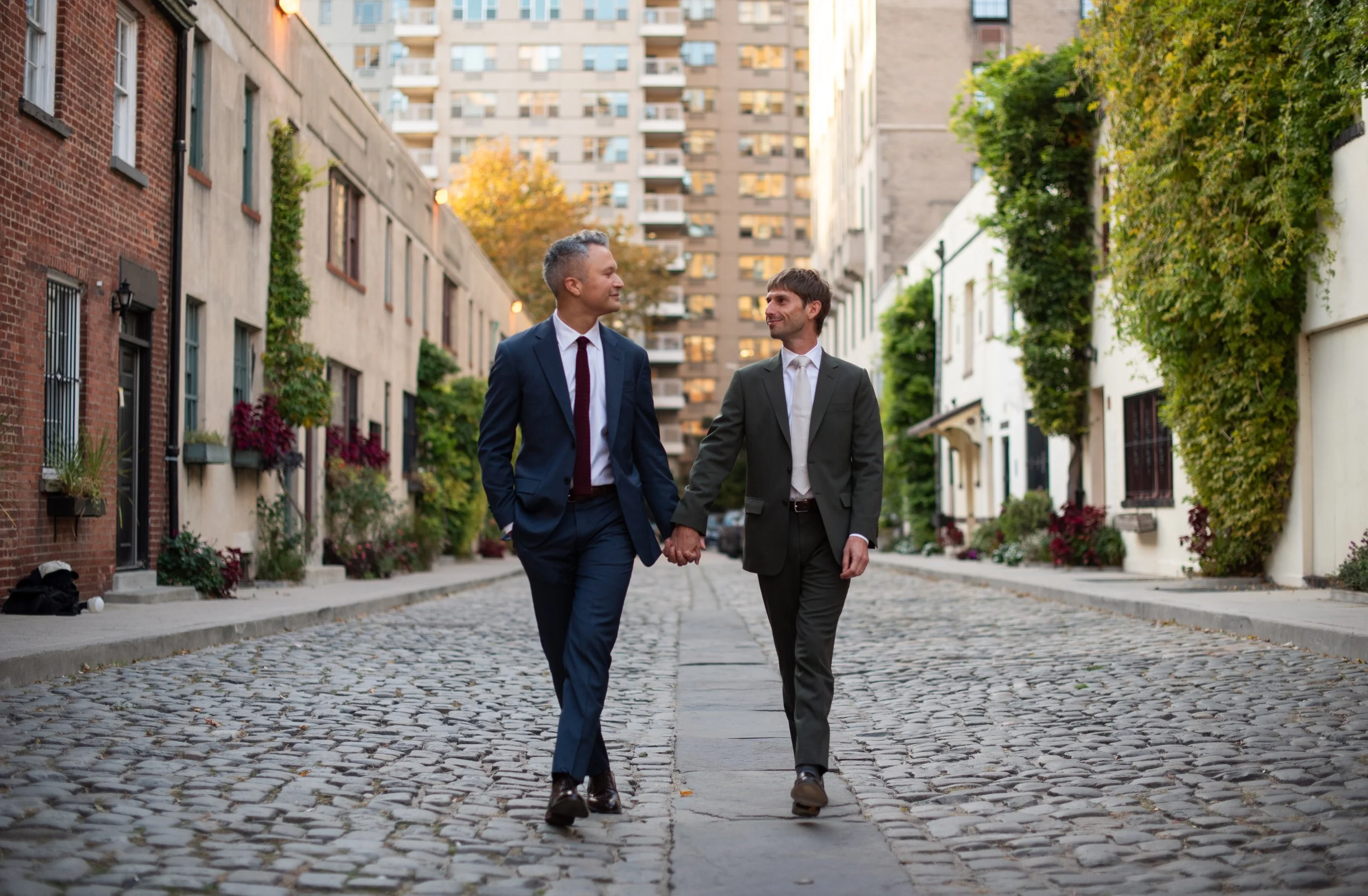
• West Village brownstone blocks
• Upper West Side stoops and tree-lined streets
• SoHo cobblestones
• Tribeca warehouse corridors
• Brooklyn Heights side streets
• Dumbo brick archways
Waterfronts
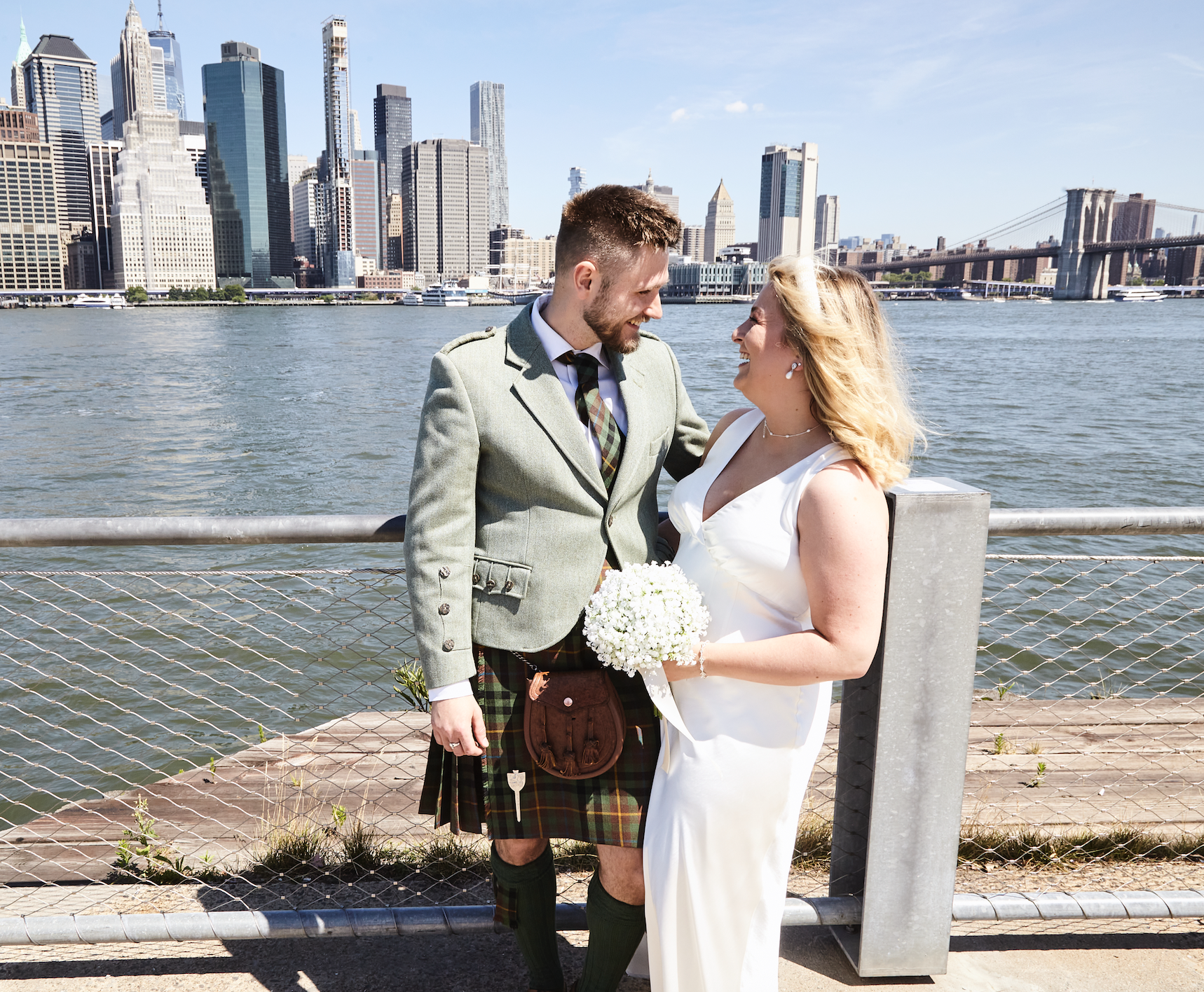
• Brooklyn Heights Promenade
• East River overlooks
• Hudson River pathways
• Domino Park viewpoints
• Gantry Plaza State Park edges
Architecture + Institutions
• The Met Steps
• The New York Public Library exterior
• Museum façades
• Cultural institutions with public stairways or plazas
Bridges + Transit
• Brooklyn Bridge (sunrise only)
• Manhattan Bridge views
• Subway entrances with strong architectural lines
Plazas + Civic spaces
• Foley Square
• Lincoln Center plaza
• Bryant Park perimeter zones
• Small city-run plazas and pedestrian zones
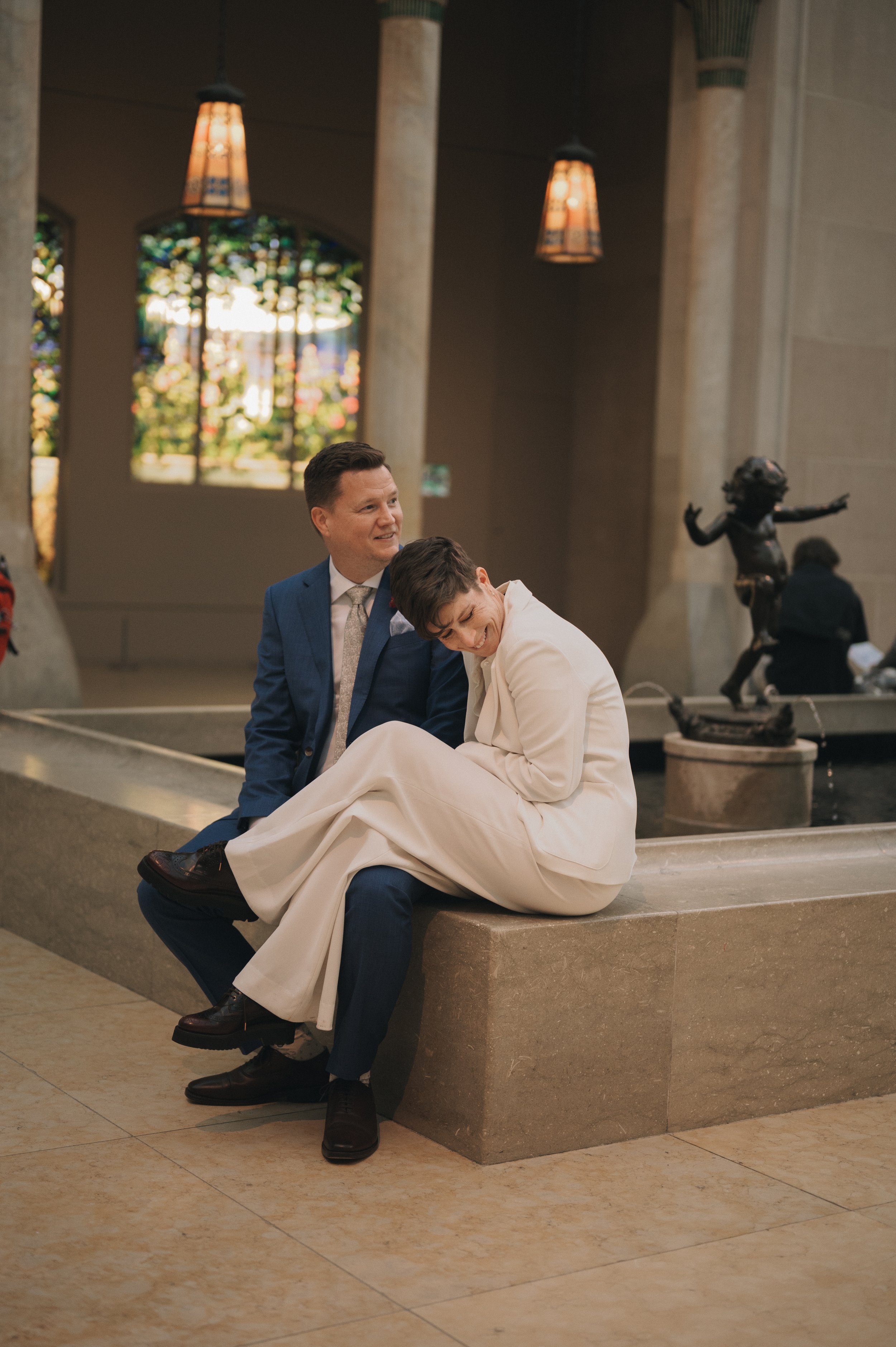
Indoor Public Spaces (case-by-case, behavior-dependent)
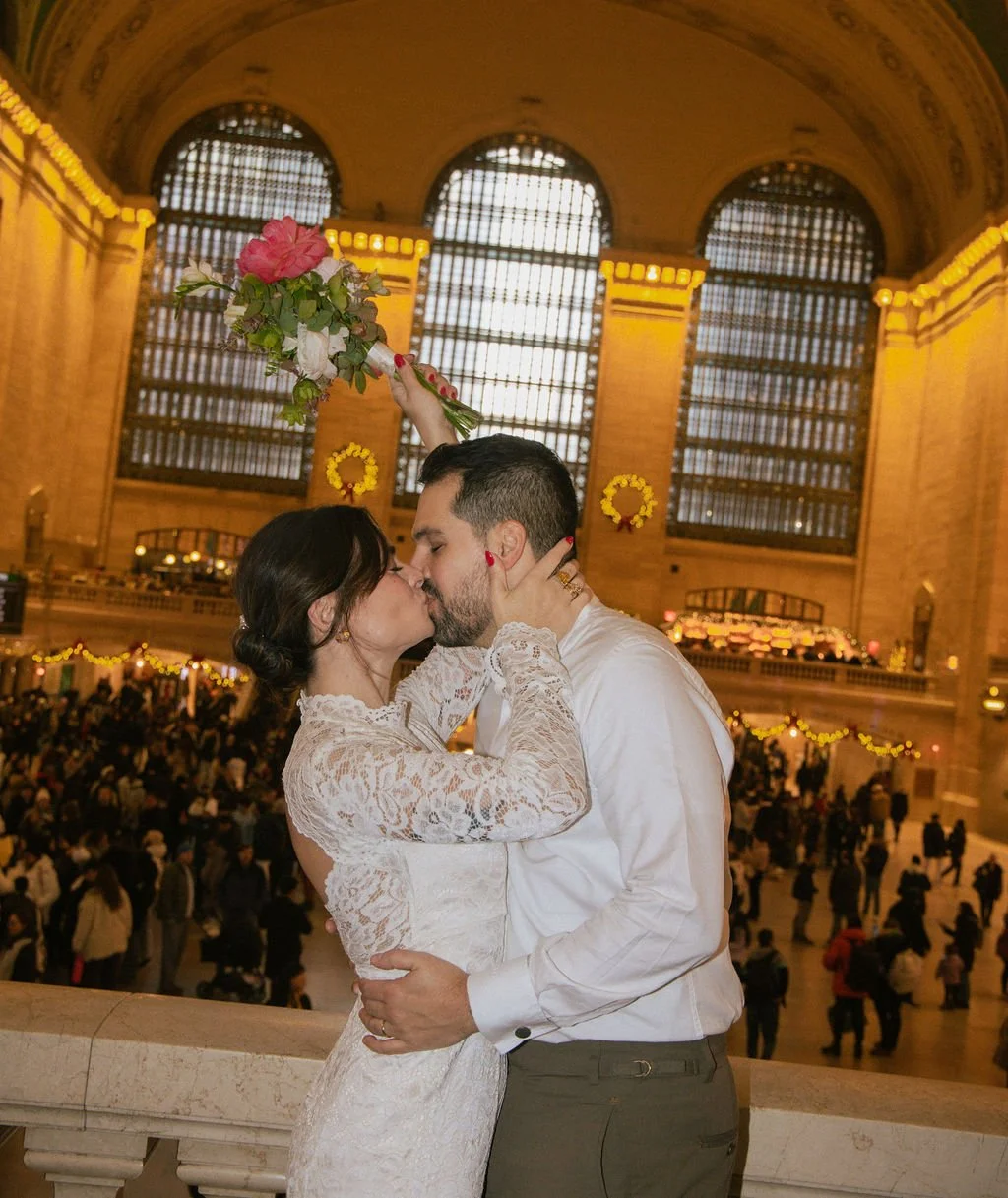
• Grand Central Terminal
• Hotel lobbies or vestibules (with permission)
• Atriums with public access
NYC is full of backdrops that are beautiful, cinematic, and legally usable for small ceremonies as long as we respect movement, noise, and flow.
This is why Cakewalk’s ceremonies feel like editorial photo essays — because the entire city becomes available when you know how to navigate it respectfully and within the rules.
Why Certain Locations Still Make Sense With a Permit
Even though many spaces do not require permits, some locations — especially those controlled by the Parks Department or conservancies — benefit from one due to:
• High popularity
• Limited physical space
• Architecture that encourages lingering
• Scenic or iconic stature
• Overlapping public events
In these cases, a permit gives your officiant a designated right to use the space for your ceremony window.
Examples include:
• Cop Cot
• Wagner Cove
• Ladies Pavilion
• Some Brooklyn Bridge Park lawns
• Conservatory Garden
• Select waterfront pavilions and pergolas
A permit does not make the space private — it simply adds structure, predictability, and ease.
Why Cakewalk Recommends Some Permits and Not Others
Cakewalk does not pursue permits out of fear or formality. We do it when:
• The location is small
• The experience is improved by some structure
• Guest count is closer to 20
• The location hosts frequent competing events
• The views or angles require space to work properly
We don’t recommend permits when:
• The space is fluid and ever-changing (e.g., The Met Steps)
• The vibe is stronger without restrictions (e.g., West Village)
• The permit would complicate, rather than support, the experience
• The view, foot traffic, or architecture naturally supports small groups without conflict
This is why we don't treat permits as a default requirement — we treat them as a tool.
Why Guest Count Still Shapes the Options
The city’s guidelines allow gatherings under 20 people in most public spaces without permits as long as the group is not obstructing pathways or creating a setup. This guideline is one of the reasons Cakewalk keeps weddings small and streamlined.
It also ensures your ceremony can:
• Move with the rhythm of the city
• Adapt to space around you
• Maintain intimacy
• Stay comfortable for everyone involved
• Photograph beautifully
When a group gets close to the 20-person limit, the space needs to support genuine gathering — which is why we sometimes suggest alternatives to narrow, high-traffic, or acoustically challenging locations.
The Bottom Line
Guerrilla weddings are not informal, unsafe, improvised, or unregulated. They are:
Thoughtfully planned, legally allowed ceremonies in New York City’s most iconic public spaces — without the administrative overhead of formal permits.
Cakewalk’s expertise lies in knowing where this approach works perfectly, where a permit improves the experience, and how to tailor every location recommendation to your guest count, season, comfort preferences, photography goals, and overall ceremony vision.
How We Build Your Personalized Location Shortlist
Once your quiz results, consultation notes, and Vibe & Vision Form are complete, we begin building a shortlist of three to five locations tailored specifically to you. Each recommendation is chosen according to:
• Season and foliage
• Lighting and time of day
• Accessibility and walking distance
• Guest count
• Photography potential
• Noise level and privacy
• Comfort, flow, and emotional tone
• Permit needs (if any)
Our goal is not to overwhelm you with options — it’s to offer the right options.
Our Philosophy on Location Curation
We never force a couple into a space that doesn’t support their experience. Instead, we match people to locations that naturally align with their style, priorities, and comfort.
We look for spaces that offer:
• Clean compositions for photography
• Room for guests to gather comfortably
• Beautiful lighting and natural backdrops
• A clear sense of place
• A balance of intimacy and atmosphere
• Easy transitions into portraits
The right location doesn’t just look good — it feels right.
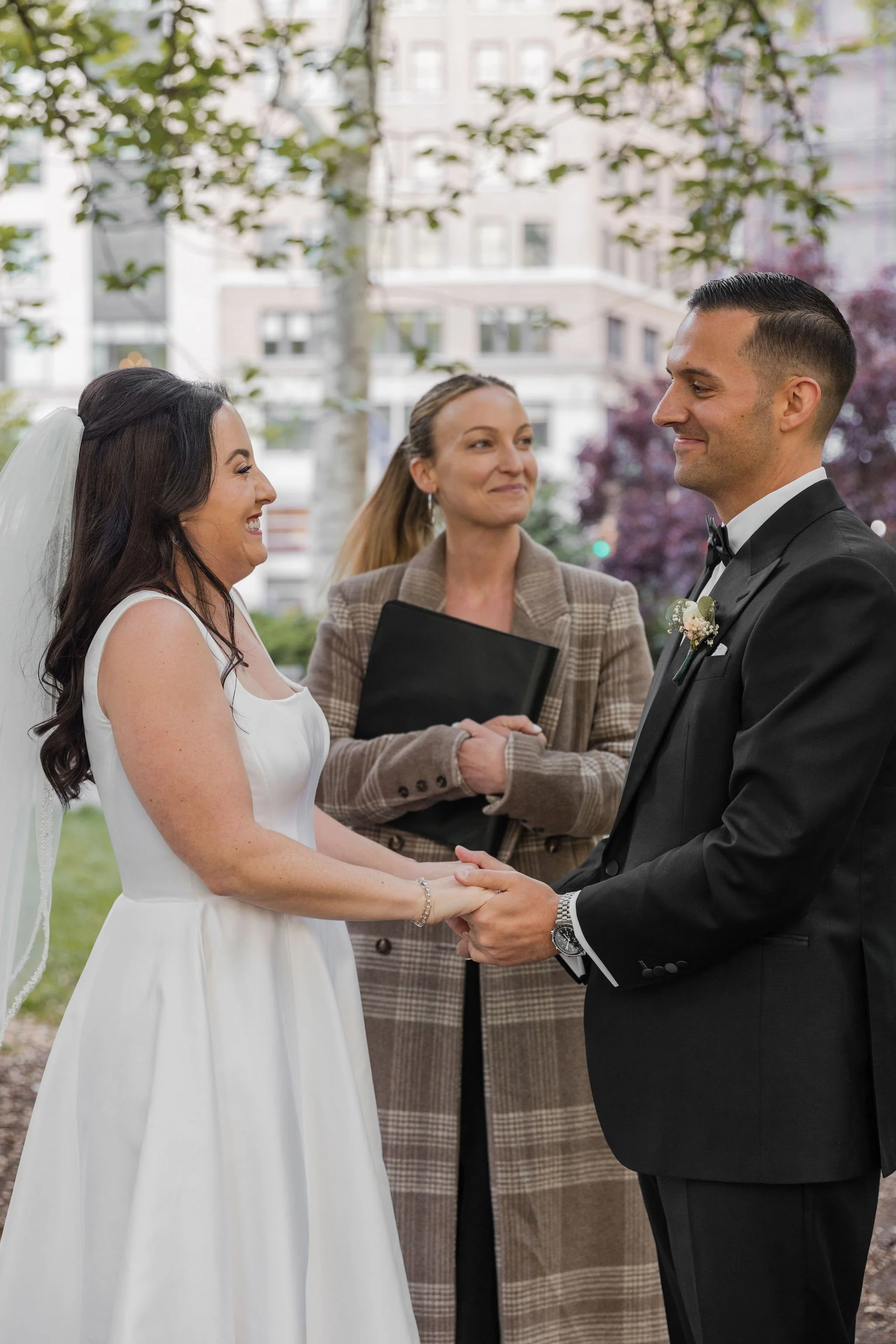
Examples of Cakewalk Favorites
While every shortlist is custom, some locations rise to the top again and again:
• Cop Cot
• Ladies Pavilion
• Wagner Cove
• Brooklyn Heights Promenade
• The Met Steps
• The Mall in Central Park at quieter hours
• The Lake bridges
• The DUMBO waterfront
• Grand Central Terminal
Each one brings something different to the experience.
Here’s the deal:
Your location sets the tone for your entire Cakewalk. With thoughtful curation, attentive planning, and deep knowledge of the city, we make sure the place you choose feels intentional, meaningful, and beautifully photographed — without adding stress to your day.
The result is a ceremony that flows naturally, reflects your relationship, and feels unmistakably like New York.