
How Cakewalk Chooses Your Los Angeles Ceremony Location
Los Angeles is 4,000 square miles, six kinds of terrain, and roughly a dozen agencies that each control a different piece of ground. Two spots two miles apart can operate under completely different rules about whether you're allowed to get married in them, when, and with how many people.
We run one-hour ceremonies across LA County, so we've learned where those lines fall. This is how we pick where yours goes: what we ask, what gets ruled out and why, and how a long list of pretty places becomes three real options.
If you're still in the browsing stage, our guide to where to elope in Los Angeles is the place to start. This page is the other half of it.
The three things that decide your location
Most location advice starts with vibe. Ours starts with three constraints, because they rule out more options than taste ever will.
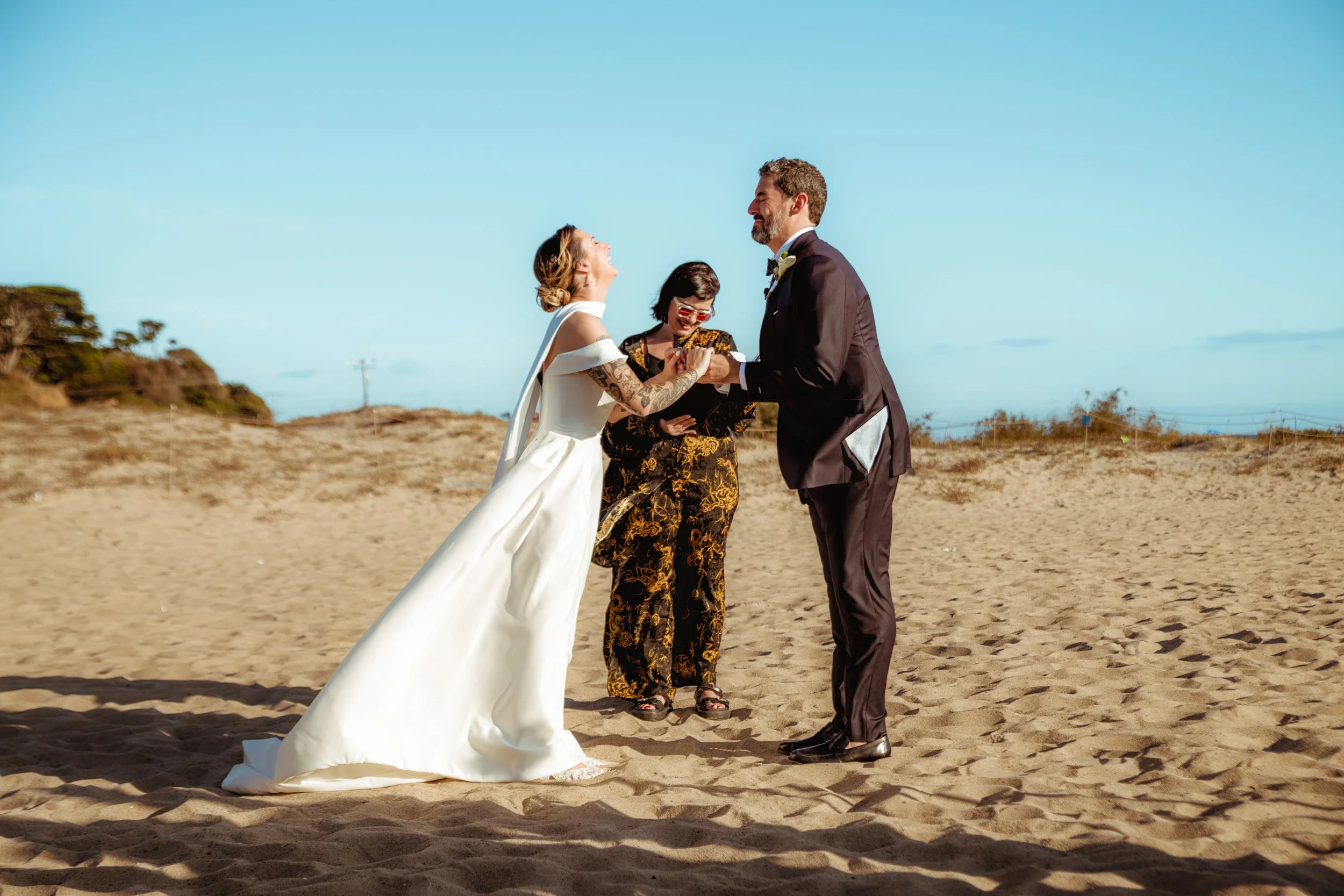
Who owns the ground. LA is a patchwork of jurisdictions, and each one has its own rules about ceremonies.
What the terrain is like. The beach, the canyons, the rugged trails or city streets. What you want your backdrop to be and how easy it is to walk around matters more here than season or time of year.
How far you're willing to drive. Almost every stop you add is a drive, and every drive is a decision about time that you're giving up.
Vibe matters. It just comes fourth, and it's the easiest of the four to satisfy once the other three are settled.
Want us to find your spot? Start here →
Who owns the ground
This is the part that surprises people. "Los Angeles" is not one authority.
City of Los Angeles parks. Griffith Park, Echo Park, Elysian Park, Barnsdall, Kenneth Hahn. Run by LA City Recreation and Parks. Small ceremonies here typically don’t need a permit, making LA Parks a very flexible option.
LA County beaches. Will Rogers, Dockweiler, Manhattan, Hermosa, Redondo, Zuma, Westward. Run by the county's Department of Beaches and Harbors. Small ceremonies with no chairs, no arch, and no amplification generally don't require a permit.
California State Parks. El Matador, Leo Carrillo, Point Dume State Beach, Topanga, Malibu Creek. These are the most photographed rocks in Southern California, and they carry the most paperwork. Permits go through the state's jurisdiction with a long lead time, which means we need to know early if you want one. We break the whole coast down in our Malibu and PCH guide.
Independent cities. Santa Monica, Beverly Hills, Pasadena, Long Beach, West Hollywood, and Malibu all run their own permitting. Santa Monica beach is not the same process as the county beach directly south of it.
Private and institutional. The Getty. The Bradbury Building. Union Station. Hotel lobbies and courtyards. Museum plazas. The owner sets the rules, and the rules frequently say no ceremonies, no tripods, or no commercial photography without a fee.
When we tell you a location is open use, permit needed, guerrilla, or off-limits, we're telling you which bucket it lands in. We'd rather be direct about that on day one than let you fall for a spot we can't deliver.
What "guerrilla" means here, and where it actually works
Guerrilla means a short, simple ceremony in a public space that doesn't require a reservation. No setup, no seating, no amplification, no blocking anyone. We show up, we do the thing, we leave the space the way we found it.
The category is real in LA. It's narrower than most people expect, and it lives in specific kinds of places.
Where it works well:
Sidewalks and residential blocks with real character. Silver Lake, Echo Park, and Highland Park are full of them.
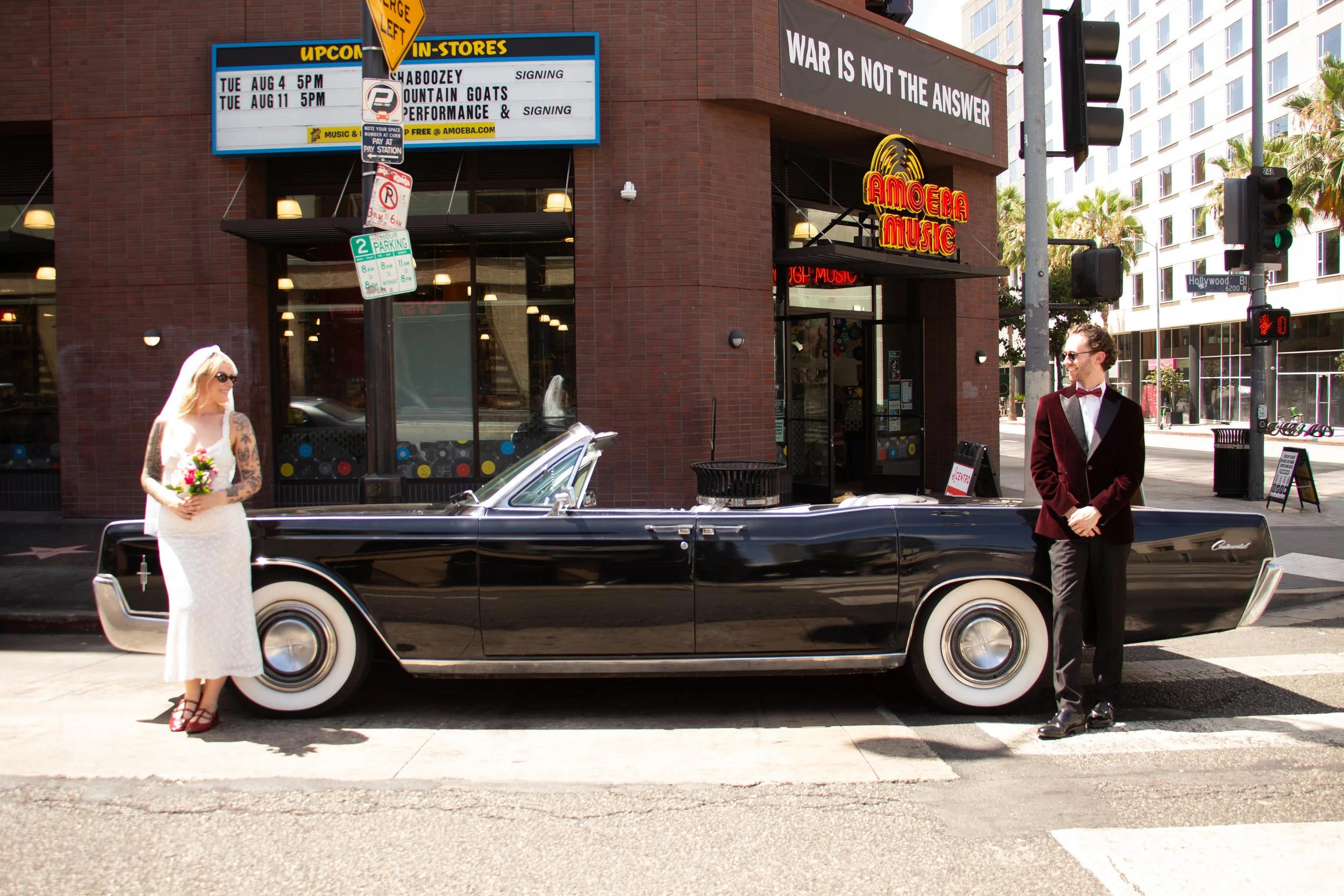
Downtown at street level. The Arts District, the Broadway theater corridor, the Bradbury exterior, the stairs and plazas around Grand Park.
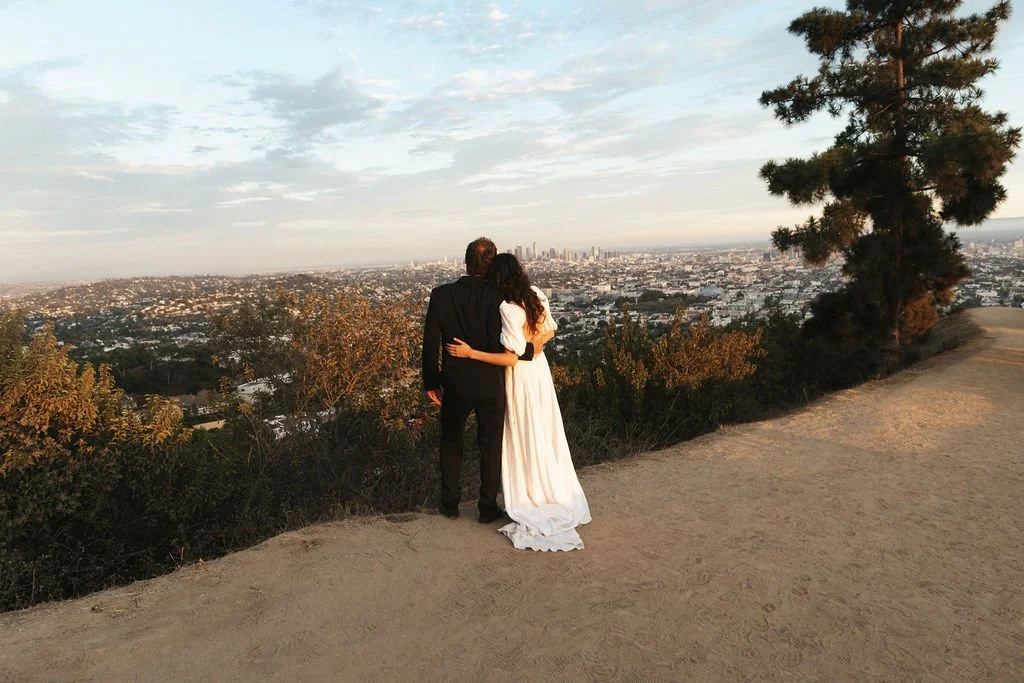
Public overlooks and trailheads, especially in the early morning. The Hollywood side of the hills has several.
County beach stretches outside of peak hours.
The Venice canals, on foot, on a weekday.
Where it doesn't:
Anywhere with a gate, a ticket, or a docent.
State park beaches, which look the most "wild" and are the most regulated.
Anywhere that requires a chair, an arch, a speaker, or a group standing still in a walkway.
We'll also tell you when something is a maybe. Interiors are usually a maybe. If we can only try for a shot without promising it, we say that out loud rather than building your day around it.
Related: Cakewalk officiants are also your day-of coordinator.
Terrain, and how much walking it takes
LA gives you sand, dirt, hillside, grass, and concrete, sometimes within a few miles of each other. They look different in photos and they feel different to stand in. Both matter.
Beach. Soft sand is slow to walk on, hot by midday in summer, and unkind to heels. It's worth it for a lot of people, but it’s worth considering the trade-offs.
Canyon and trail. Uneven footing, some elevation, and often a real walk from where you park. Beautiful and gives some of the best views of the city, but less accessible depending on the trail.
City streets. Flat, close to everything, and easy on everyone. The trade is noise and foot (and car) traffic, which some couples love and some don't.
Parks. The middle ground, but "a short walk from the car" means very different things at Griffith Park than at Echo Park. LA parks include a range of sizes, terrains, water features, wildlife, and foliage. We can help you pick the park that best suits you.
The questions we ask before we recommend anything: how far is it from the car, what are you wearing on your feet, and does anyone in your group have accessibility needs. Those three answers eliminate more locations than anything else on this list.
The drive is part of the day
This shapes an LA wedding more than anything else on this page. You drive between locations here, and traffic is not a rounding error.
How we handle it:
We cluster. Ceremony and photo stops should sit inside a tight radius so you're spending your hour on your wedding, not on the I-10.
We check parking before we recommend anything. A gorgeous block with no parking within a half mile is not a gorgeous block on a wedding day.
We'd rather give you two strong locations five minutes apart than four locations that turn your day into a commute.
If you want a coast-to-city day, that's doable. We'll just tell you what it costs you in time so you can decide whether it's worth it.
How guest count changes the answer
Many Cakewalks are just the two of you, or the two of you plus a small handful of people. That's when the widest range of LA is open.
As the group grows, three things start to bind:
Parking. Usually the first constraint to break, well before space does.
Permit thresholds. Most areas are flexible for small groups. Larger groups can move you into permit territory.
Standing room. A bluff, a staircase, or a canal footbridge that's perfect for two people gets awkward at twelve.
We don't push you toward or away from guests. We just curate the options in your Mood Board around the number you give us. More on how that works in our LA FAQ.
How the Mood Board gets built
By the time we're choosing locations we've got your quiz answers, your consultation, and your Vibe and Vision responses. That's enough to narrow LA down about three real options.
What we weigh:
Your zone. Westside, Eastside, Beach Cities, the Valley, the foothills, downtown. Where you're staying and where you're coming from both count.
Time of day and weekday, and what the crowd levels are like.
Drive time between the ceremony and every photo stop.
Parking and drop-off.
Access rules and lead time, so nothing on the list is a fantasy.
Terrain and footwear. Sand, stairs, uneven trail, and long walks are all real considerations.
Whether your dog is coming.
You get options with honest trade-offs attached, so you can design the day that best fits your vision.
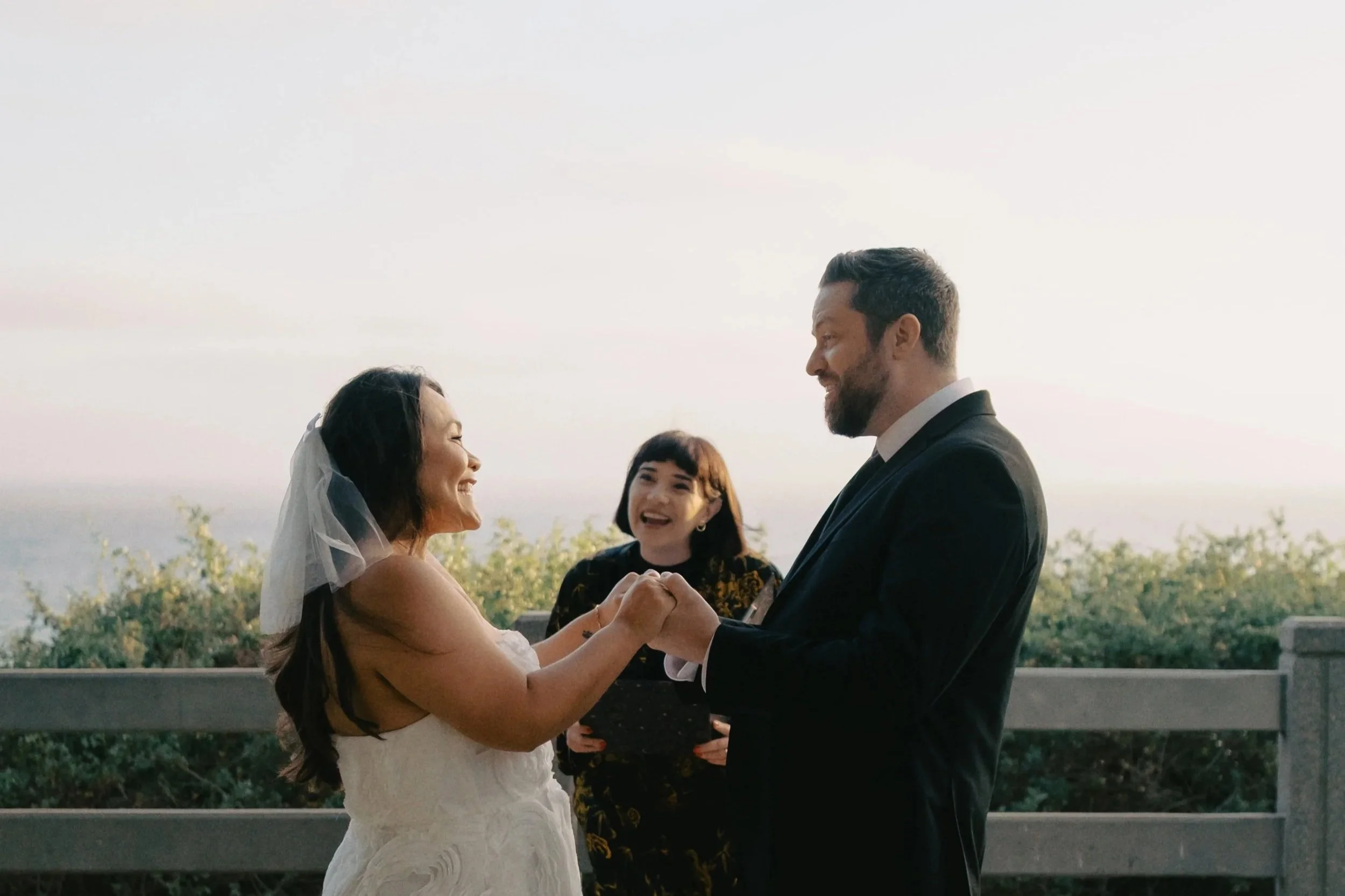
A few places we keep coming back to
Every shortlist is built for the couple, but some spots earn their spot over and over.
The Santa Monica coast. Wide beach, easy access, and a straight shot from most of the Westside. Dacia and Terrence got married here.
Griffith Park. Big enough to have five distinct personalities. Trails, meadows, city views, and the observatory in the background.
Lake Hollywood Park. Sign views, open grass, and a short walk from the car. Emma and Adam's day is a good look at how it photographs.
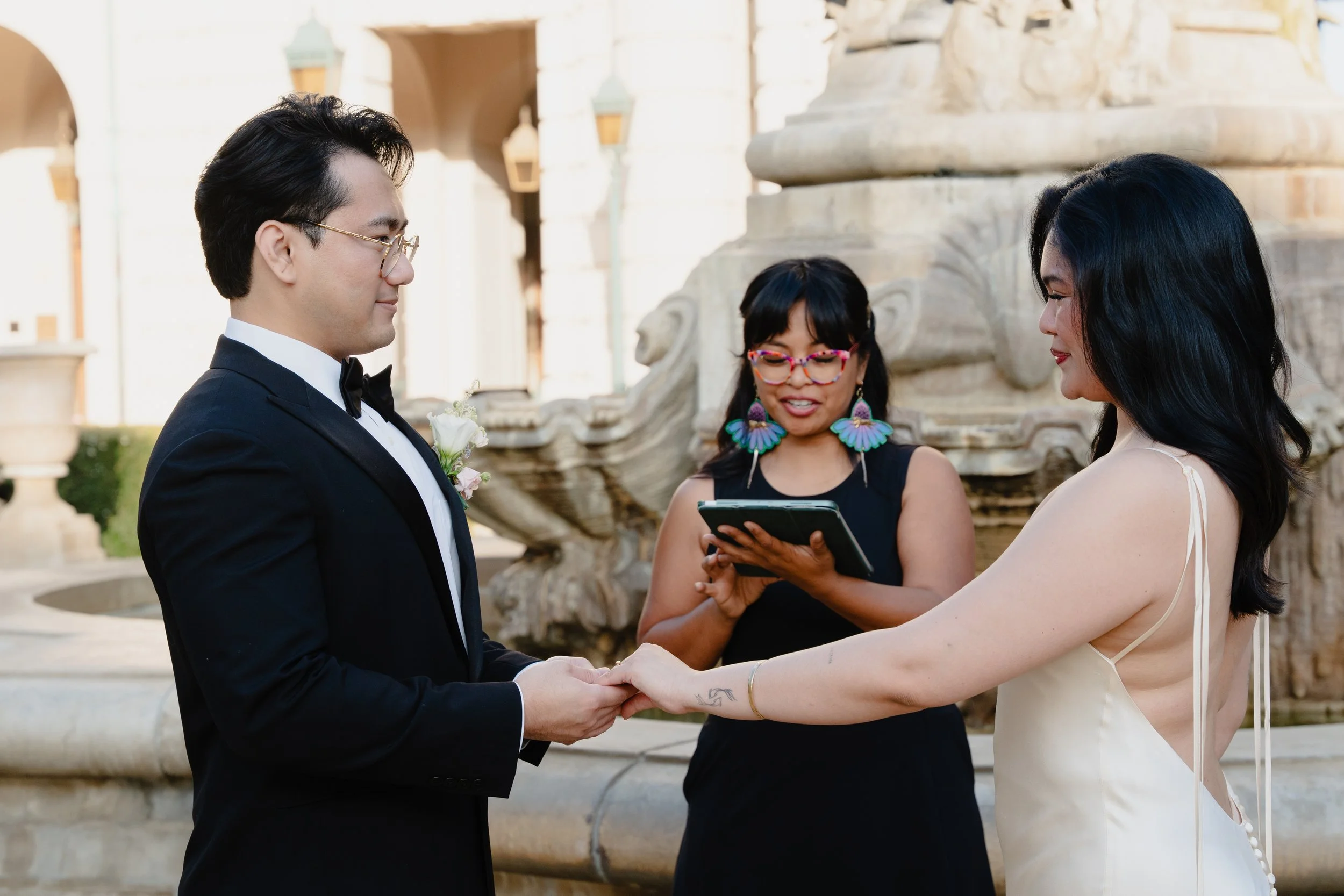
Pasadena City Hall. Arches, a courtyard, and architecture that does most of the work for you. See Zeth and Stephanie.
The Arts District. Brick, murals, loading docks, and good coffee within a block. Reliable in bad weather and in heat.
The Venice canals. Quiet, strange, and completely unlike anything else in the county.
The blocks around Silver Lake and Echo Park. Ceremony on a stoop or under a jacaranda, and dinner five minutes later.
Point Dume and El Matador. Worth the paperwork and the drive if the rocks are the whole point for you.
You can see more of how these come together in our LA real weddings.
The bottom line
Getting married in Los Angeles is easy. Picking where is the part that takes local knowledge, because the difference between a great spot and a headache is often invisible until you're standing in it at 4:00 on a Saturday looking for parking.
That's the part we do. You tell us what you want the day to feel like. We handle who to ask, when to be there, and how to get you between the two.