
Central Park Elopement
Small ceremonies, lush oak trees, no venue rental required.
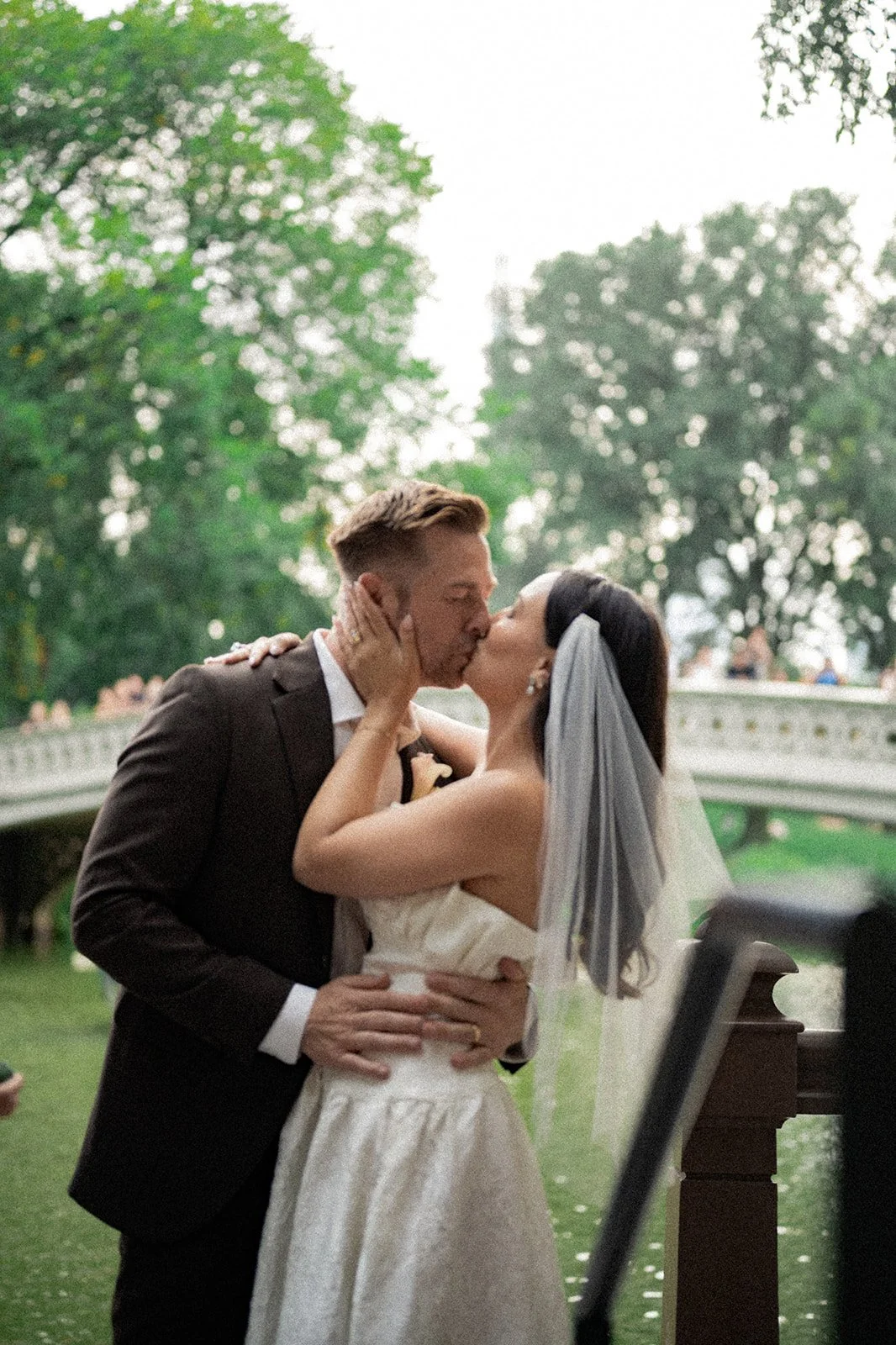
Why Couples Elope in Central Park
Central Park is the most photographed ceremony location in New York, and for good reason. You don't need a venue, the backdrops are free, and the city does most of the work for you.
We plan and run Central Park ceremonies for up to 20 guests, start to finish. That means the permit, the officiant, an hour of photography, and your marriage license, all handled. No packages, no upsells, no DJ trying to sell you uplighting.
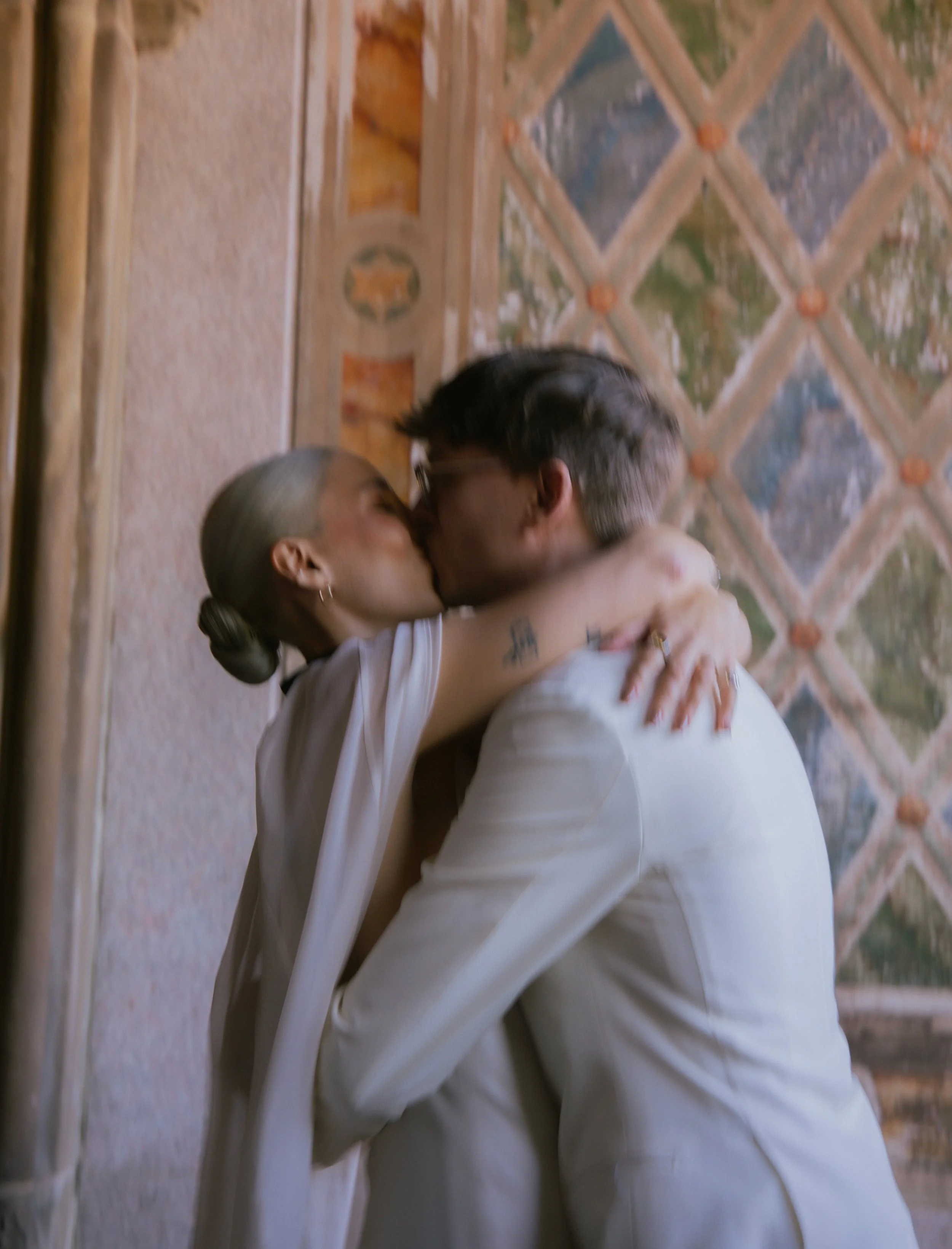
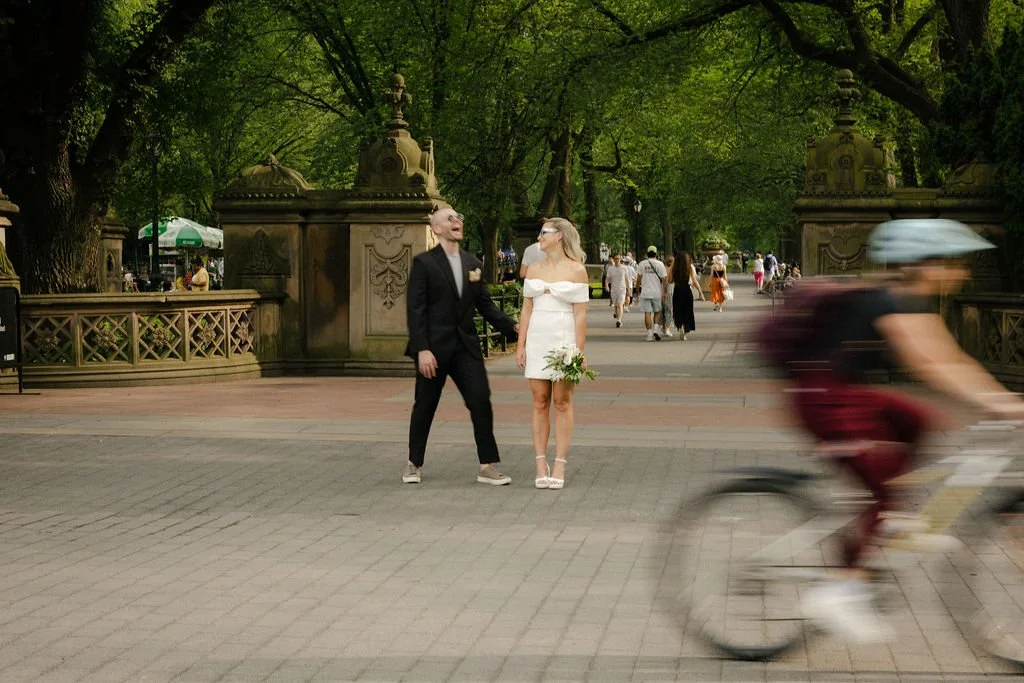
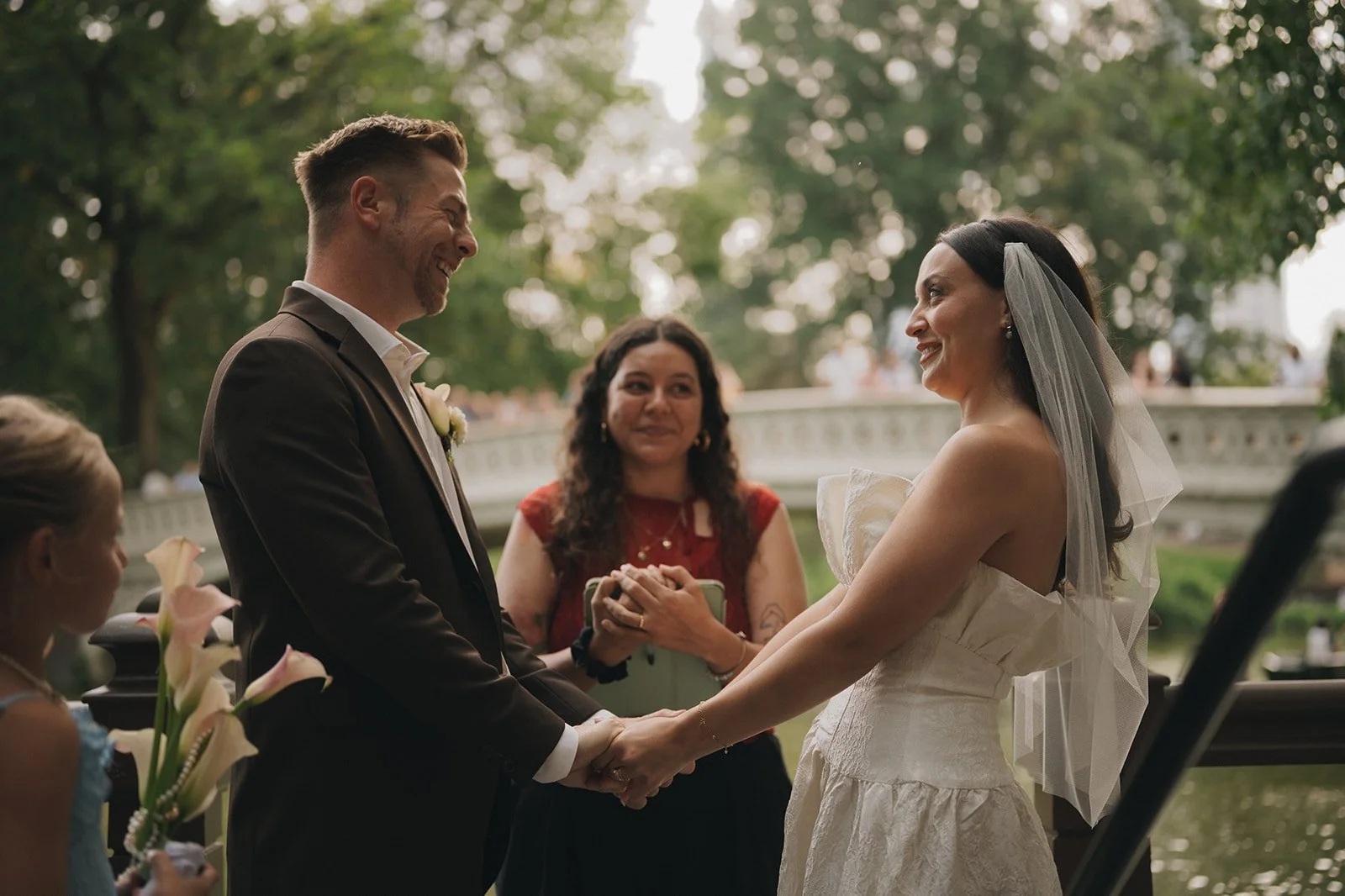


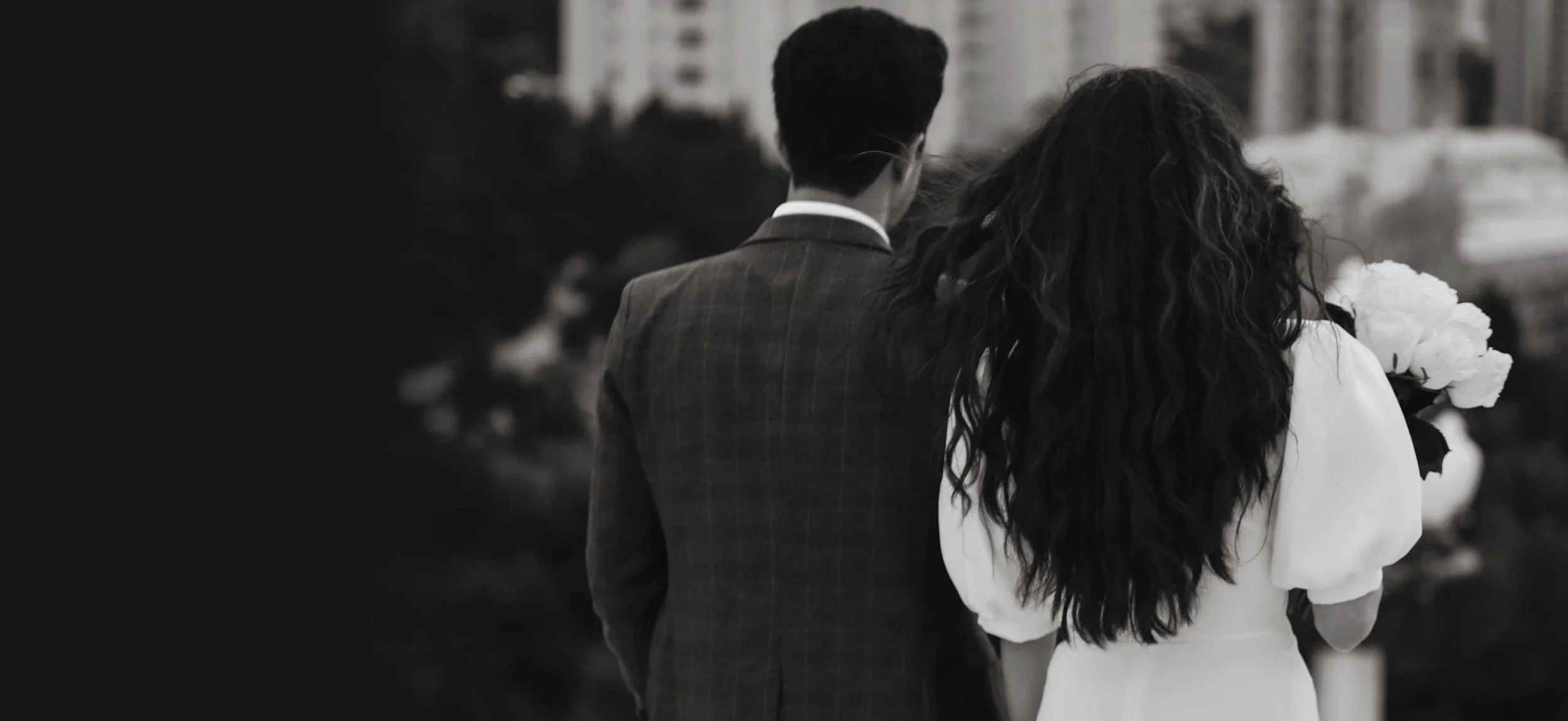
a few Central Park locations that we actually book
Central Park is 843 acres. There are about a gajillion viable ceremony spots, but we’ve got some favorites. Here's what they are, who they're right for, and what to know.
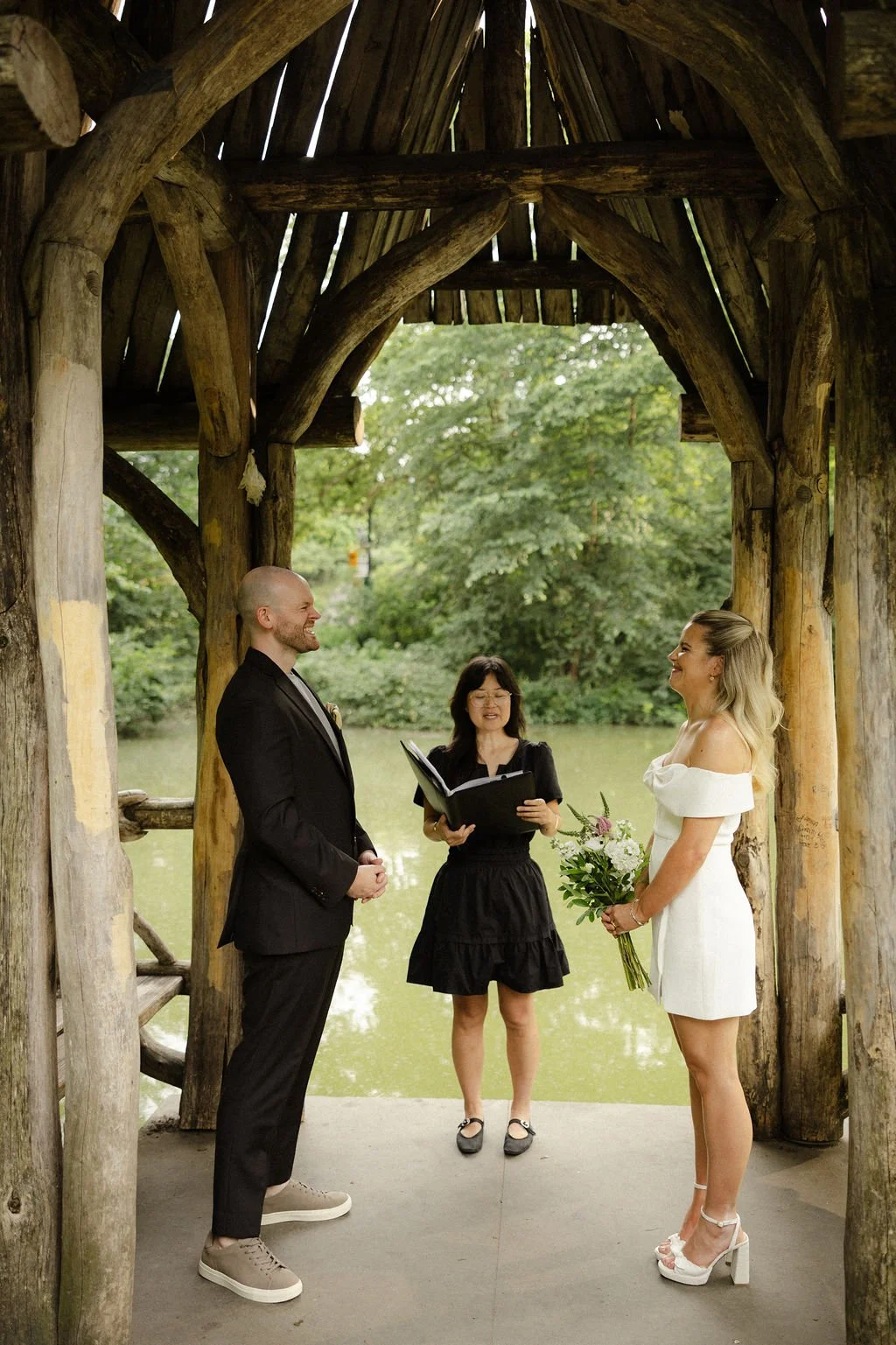
Wagner Cove
A tiny wooden pavilion tucked into a corner of the Lake on the west side, around 72nd Street. Most people don't know it exists, which is the point. It seats your guests comfortably, the lake is right behind you, and you'll usually have it to yourselves.
Good for: Small ceremonies that want a real backdrop without an audience of tourists.
Permit: Yes, requires NYC Parks permit. Books up fast in May, June, September, and October.
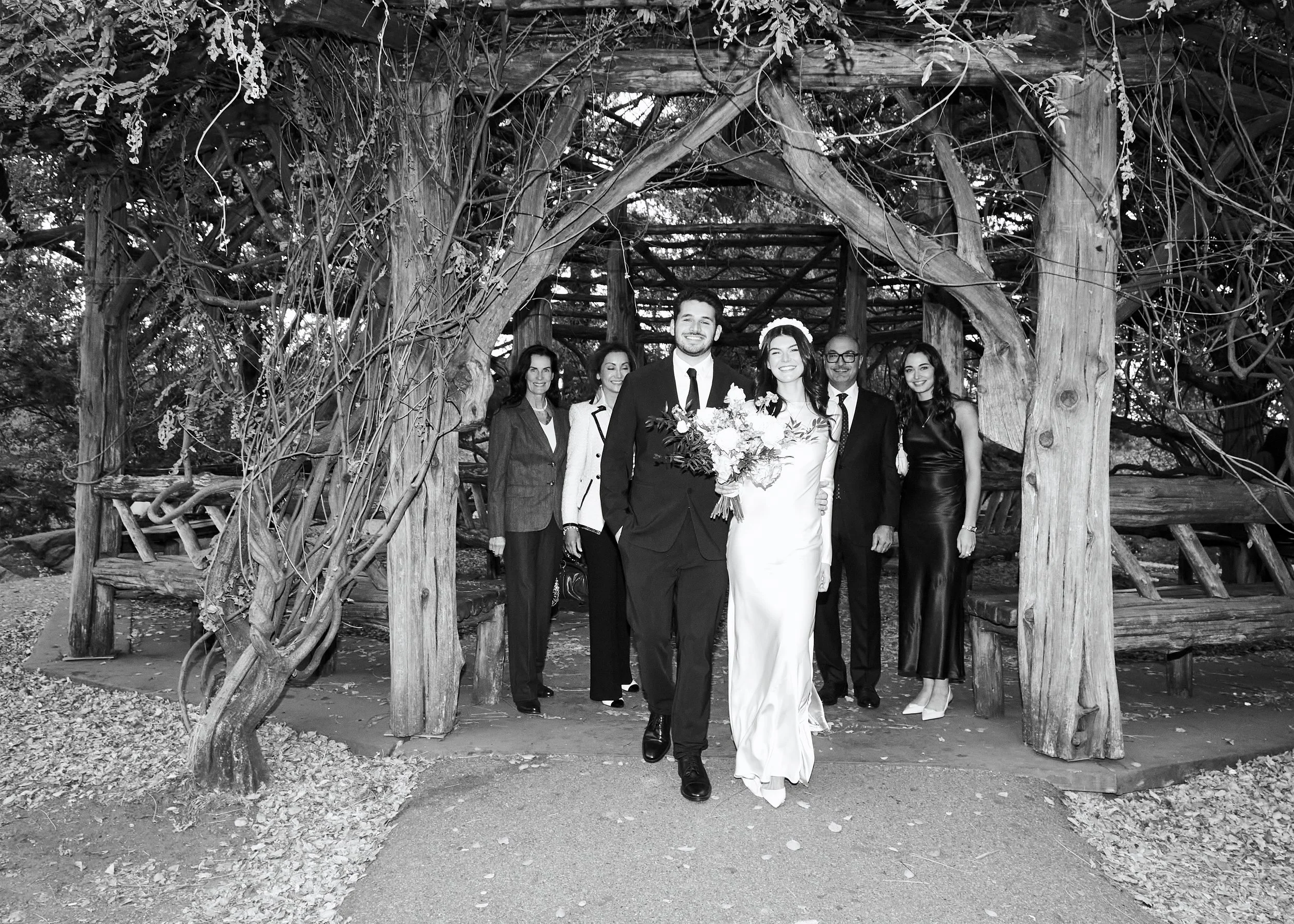
Cop Cot
A rustic wooden gazebo near the southeast corner of the park, around 60th and 5th. Quiet, intimate, surrounded by trees. It feels more like the woods than midtown, which is funny because you're a block from the Plaza.
Good for: Ceremonies that want privacy and don't need the iconic Central Park backdrops in every shot.
Permit: Yes, NYC Parks permit required.
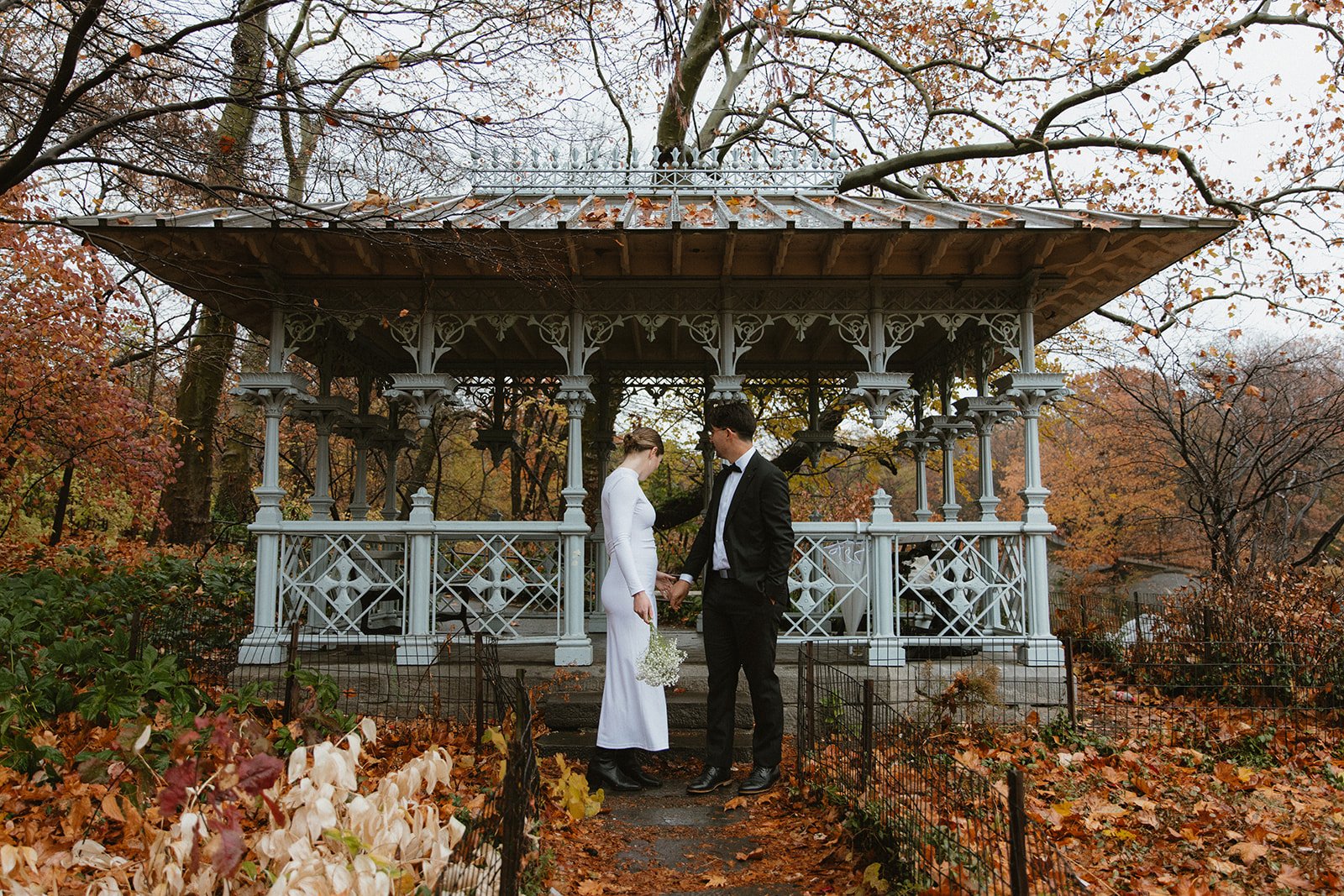
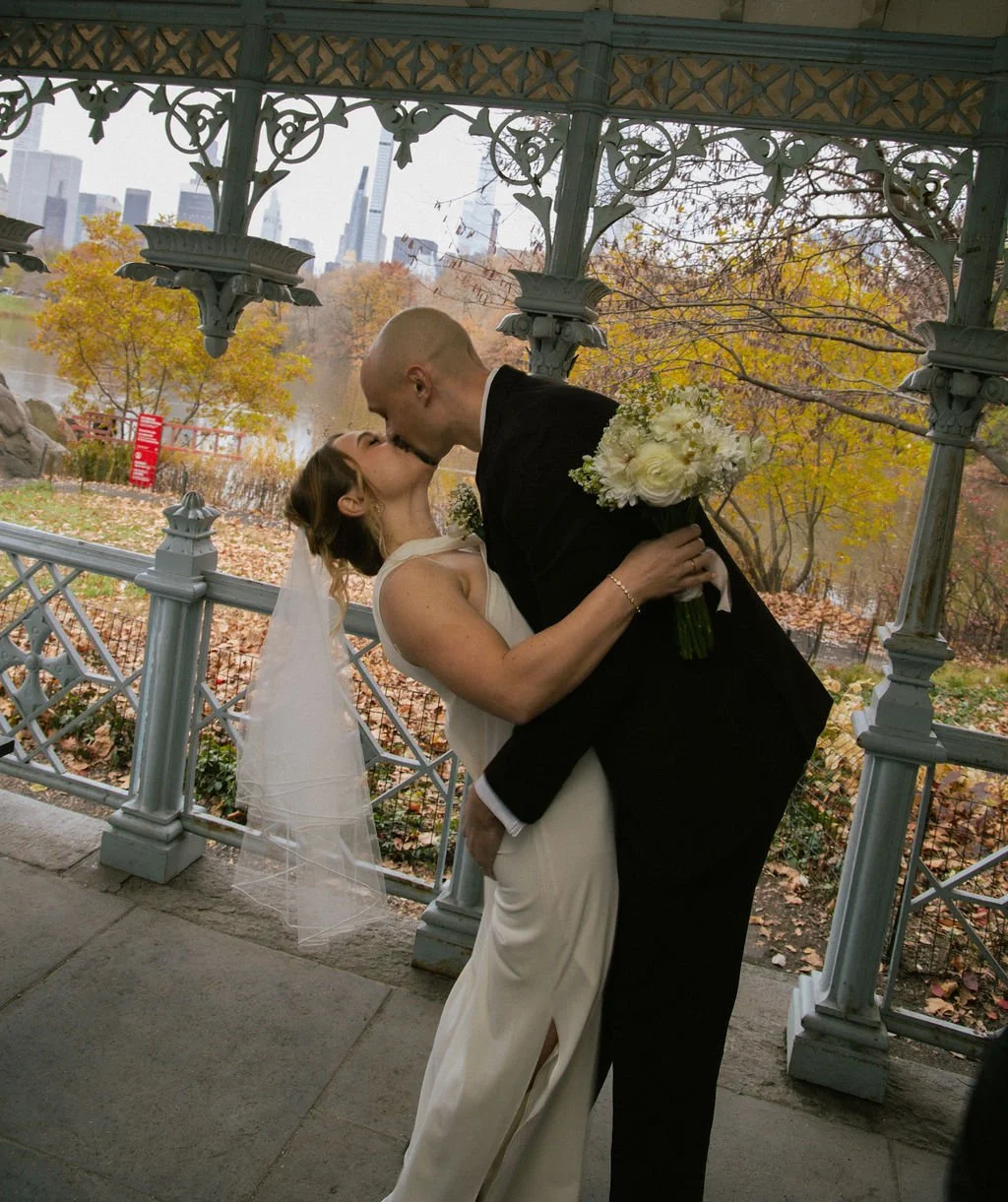
Ladies Pavilion
A Victorian cast-iron pavilion on the west side of the Lake near Hernshead, around 75th. Smaller than Bethesda but stunning, with the kind of ironwork that photographs beautifully in any light.
Good for: Couples who want something photogenic and a little hidden.
Permit: Yes, NYC Parks permit required.
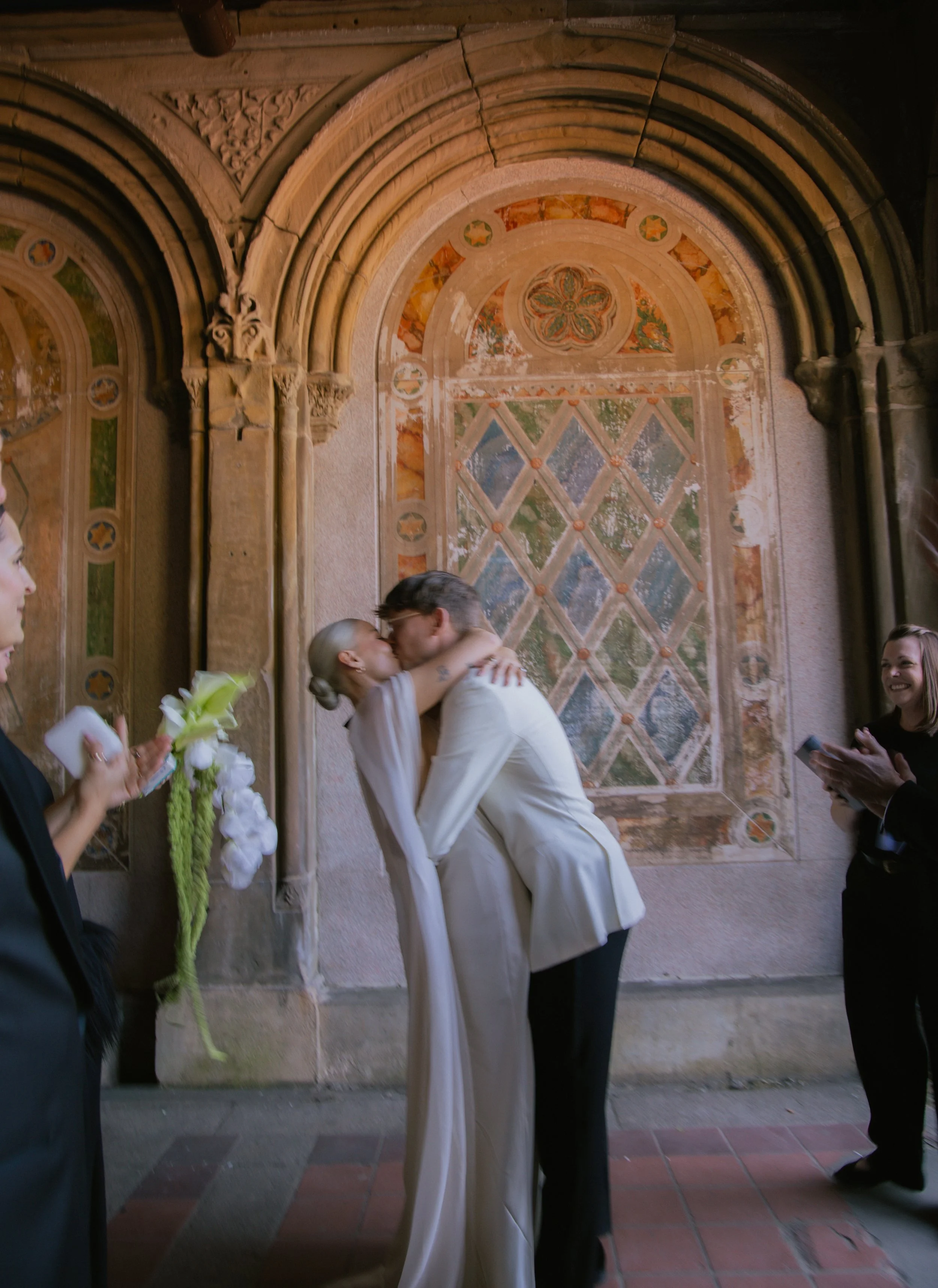
Bethesda Terrace and Arcade
The most iconic ceremony spot in the park, and the most crowded. The Arcade (the tiled tunnel beneath the terrace) has acoustics that make a violinist sound like a quartet. The terrace itself, with the angel fountain and the lake behind it, is the postcard.
Good for: Couples who want the classic Central Park shot and don't mind onlookers.
Permit: Permits are limited and specific. We'll tell you straight up whether your date and time are realistic.
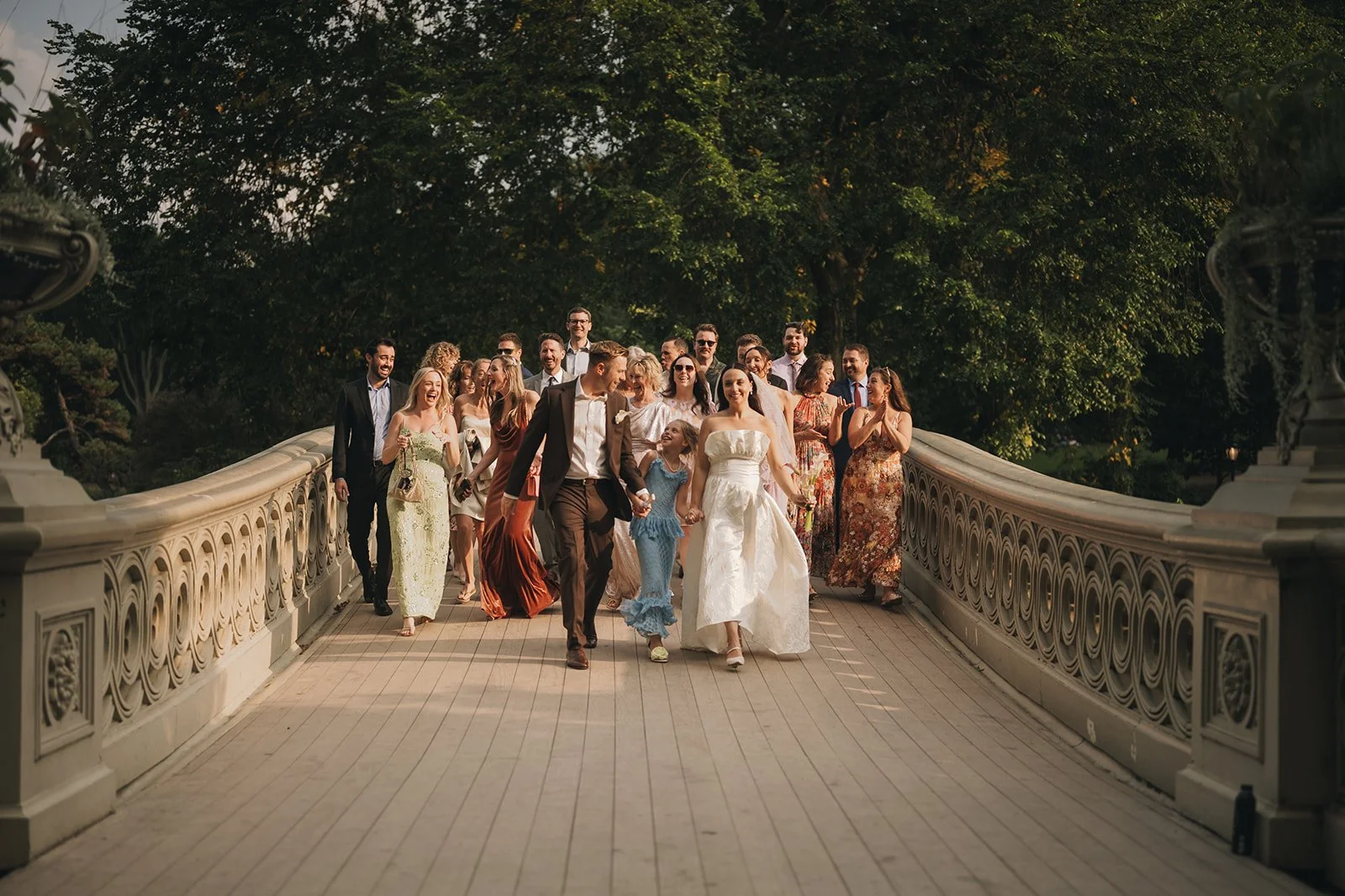
Bow Bridge
The cast-iron bridge over the Lake. Iconic, photogenic, and yes, busy. Mornings are quieter. Afternoons are not.
Good for: Couples who want a clean, recognizable Central Park shot and are okay with people stopping to watch.
Permit: Yes, NYC Parks permit required.
What NYC Parks actually requires
Most people don't realize you need a permit to get married in Central Park. You do, for any of the spots above. Here's the reality:
Permits are issued by NYC Parks and Recreation. They review applications individually.
Applications generally need to be submitted at least 30 days out, but realistically you want 60 to 90 days for the popular spots in busy months.
Your date is not confirmed until the permit is approved. We don't promise a spot before that happens.
Permits restrict things like chairs, arches, amplified music, and group size. We'll walk you through what's allowed for your specific spot.
The fee varies by location and season.
What we handle: The application, the back and forth with Parks, the fee, and any follow-ups. You don't need to learn the system.
Pricing
Starts at $4,000. That includes:
Full-service, white-glove planning
Officiant (who also runs the day-of timeline)
Documentary style photography
NYC Parks permit booking and fees
Marriage license processing and appointment booking
Common add-ons:
Super 8 videography
Live Violinist
Extra photo hours
Film photography
No packages, no tiers, no mystery line items. You add what you want.
What a Central Park Cakewalk actually looks like
This is the typical timeline for a 4 PM ceremony with photos and cocktails after.
3:55 PM — Photographer meets you at the ceremony spot. Officiant gathers everyone.
4:00 PM — Ceremony begins. Most ceremonies run about 10 minutes.
4:10 PM — Married. Quick photos with family and friends.
4:20 PM — Off with your photographer. Run around the park, hit your favorite spots, real time as a newly married couple in front of the camera. Bethesda, Bow Bridge, Cherry Hill, the Mall, whatever's close and looking good that day.
4:55 PM — Photography wraps. We send you off a newly married couple.
We build the actual timeline around your spot, your guest count, and whatever you're doing after.
Central Park Elopement FAQ: Your Questions Answered
-
No. The park is your venue. After the ceremony, most couples go to a restaurant for dinner with their guests. We can recommend places that handle parties of 10 to 20 well.
-
Up to 20. That's the cap on a Cakewalk ceremony, and it's also what most Central Park permits allow without escalating to a more restrictive permit category.
-
Acoustic, yes. A violinist or a small acoustic group is the right move and works at every spot above. Amplified music is generally not allowed without a separate permit, which usually isn't worth pursuing for a 20-minute ceremony.
-
We build a rain plan into every Central Park ceremony. Bethesda Arcade is the strongest backup (it's covered). For other spots, we work with you on a backup indoor location or a reschedule, depending on the forecast.
-
Most Central Park permitted locations have some built in seating. Full ceremony setups with rented chairs, arches, runners, etc., are not allowed under standard Parks permits. Most of our couples have guests stand for the 20 minutes, which is what these spots are built for.
-
We book your City Clerk appointment, walk you through the paperwork, and make sure your license is signed and filed correctly after the ceremony. New York requires a 24-hour waiting period between the appointment and the ceremony, so we plan around it.
-
Technically, two people standing in a park reading vows is not illegal. But the moment you have an officiant, guests, or anything that looks like a ceremony, Parks enforcement can ask you to move. We don't typically run unpermitted Central Park ceremonies.
-
For peak months (April through June, September, October), 4 to 6 months out is ideal. Off-peak, 2 to 3 months is usually enough. We've also turned around Central Park ceremonies in under 30 days when the date and spot allow.
As Seen In:
-
![Two swans forming a heart shape with their necks, with one holding a pink flower in its beak, under a row of seven black stars.]()
Ally and Ryan
THANK YOU Cakewalk team! Just thank you. We watched so many of our friends do huge weddings – it all felt so forced to us. We wanted to have a wedding that felt very New York, but honestly just could not afford it (ha, what could feel more New York than that?). Getting married in the neighborhood where we had our first date was so cool. So special. We will never forget it. Thanks for making it easy.
-
![A pink cartoon-style car with the words "just married" on the side, decorated with black stars above it and wedding cans tied to the back.]()
Lala and Romy
Cakewalk absolutely nailed it. Our wedding day was genuinely fun, and it truly reflected who we are. When we look back on the experience, we're grateful to have partnered with a company that completely understood our vision – Lia and Annie just got us. Our wedding was effortlessly cool and simple. We loved it!
-
![A pink heart-shaped cake decorated with pink and purple frosting, cherries on top, with a black curved row of stars and the words 'just married' in white in the center.]()
Eleni and Will
I mean, come on. We got married at the Brooklyn Public Library for goodness sake. It was seriously so fun and so many of our friends have told us they wished they approached their wedding the way we did. We absolutely LOVE our photos, the Cakewalk photographers actually captured the spirit of our relationship in those candid moments. Can’t recommend Cakewalk enough.
-
![Two illustrated cherubs with wings, pink hearts, and a row of five black stars above them.]()
Gabby and Lucy
We had a huge wedding planned. Right when it got to the point of signing huge checks we looked at each other and basically realized we didn’t want to go down that road. When we found Cakewalk, it’s like they sensed exactly what we wanted: a wedding ceremony that felt significant, but wasn’t going to financially and emotionally stress us out. We’re seriously so happy with our photos and our memories of that day – no regrets whatsoever. We recommend Cakewalk to all our friends.
-
![Two swans forming a heart shape with their necks, holding a pink flower in their beak, with five black stars above them and a pink puddle of water.]()
Alex and Julia
When we were trying to figure out the wedding we wanted, we both agreed we wanted it to feel like we were truly surrounded by the people we loved and have this be a warm intimate experience. Cakewalk got it. They planned the perfect ceremony surrounded by the people that mattered most to my husband and I. The footprint was small, the feeling was so full. Highly recommend.


