
How to Elope in Los Angeles: A Step-by-Step Guide
In this guide: what counts as eloping in LA, the marriage license, picking your area, permits, your officiant and photographer, building the day, the after-party, best time of year, a sample timeline, real LA weddings, and what it costs.

Most "how to elope" guides are either a list of pretty places or a vague pep talk. This one is the actual process, in order, so you can see the whole thing and figure out what you can do yourself and what you'd rather hand off.
We're using "elope" the way we do everywhere: a real ceremony, somewhere that looks like LA, up to about 20 guests not counting the two of you, photographed well, no reception-industrial-complex attached. Here's how it comes together.
Step 1: Decide the shape of the day
Before locations, before anything, decide how you want it to feel and how many people are coming. Small and just the two of you, or a handful of family, or up to about 20. That number drives everything else, the location, the permit question, the timeline. LA rewards keeping it small and keeping it tight.
Step 2: Get the marriage license
You need a California marriage license, in person, from an LA County clerk. It's $91 for a public license or $85 for a confidential one, both of you show up with photo ID, and there's no waiting period, so you can marry the same day you get it. It's good for 90 days, anywhere in the state.
Here's the full California marriage license guide →
Step 3: Pick where
This is the fun part and the part LA makes harder than it should be, because the city is huge. Don't scatter your day across it. Pick one area and stay roughly inside it. Here are a few areas in the city that actually work for a small wedding: Venice, Hollywood and the hills, the Malibu coast, and the East Side. Explore the full breakdown of Los Angeles locations in our location guide, plus how Cakewalk help you choose the perfect ceremony location.
Step 4: Sort out permits
Whether you need a permit depends on the spot. A couple, an officiant, and a photographer on a public sidewalk or a public beach usually doesn't. Parks, popular landmarks, and anything with a setup often do. Some of the best spots can be permitted, which is what buys you the space and the certainty. This is the piece most people underestimate, and it's worth getting right before you fall in love with a location.
Step 5: Line up an officiant and a photographer
An officiant makes it legal and runs the ceremony. A photographer is what you actually walk away with. For a short LA elopement these two people are most of the day. If you're booking them yourself, book early, good ones go fast in busy season.
Read how Cakewalk’s officiants double as your day-of coordinator →
Or what makes Cakewalk’s documentary-style photography different →
Step 6: Build the timeline
An LA elopement runs best as a moving day, not a standing-around day. A rough shape: a short ceremony, then couple photos, then time with your people, ideally all within one area so you're not losing an hour to the 405. Keep the driving minimal and the day flows.
Step 7: Plan the after
Dinner, drinks, whatever you want the celebration to be. Book it near your ceremony area so nobody's crossing the city.
When to elope in LA: season and time of day
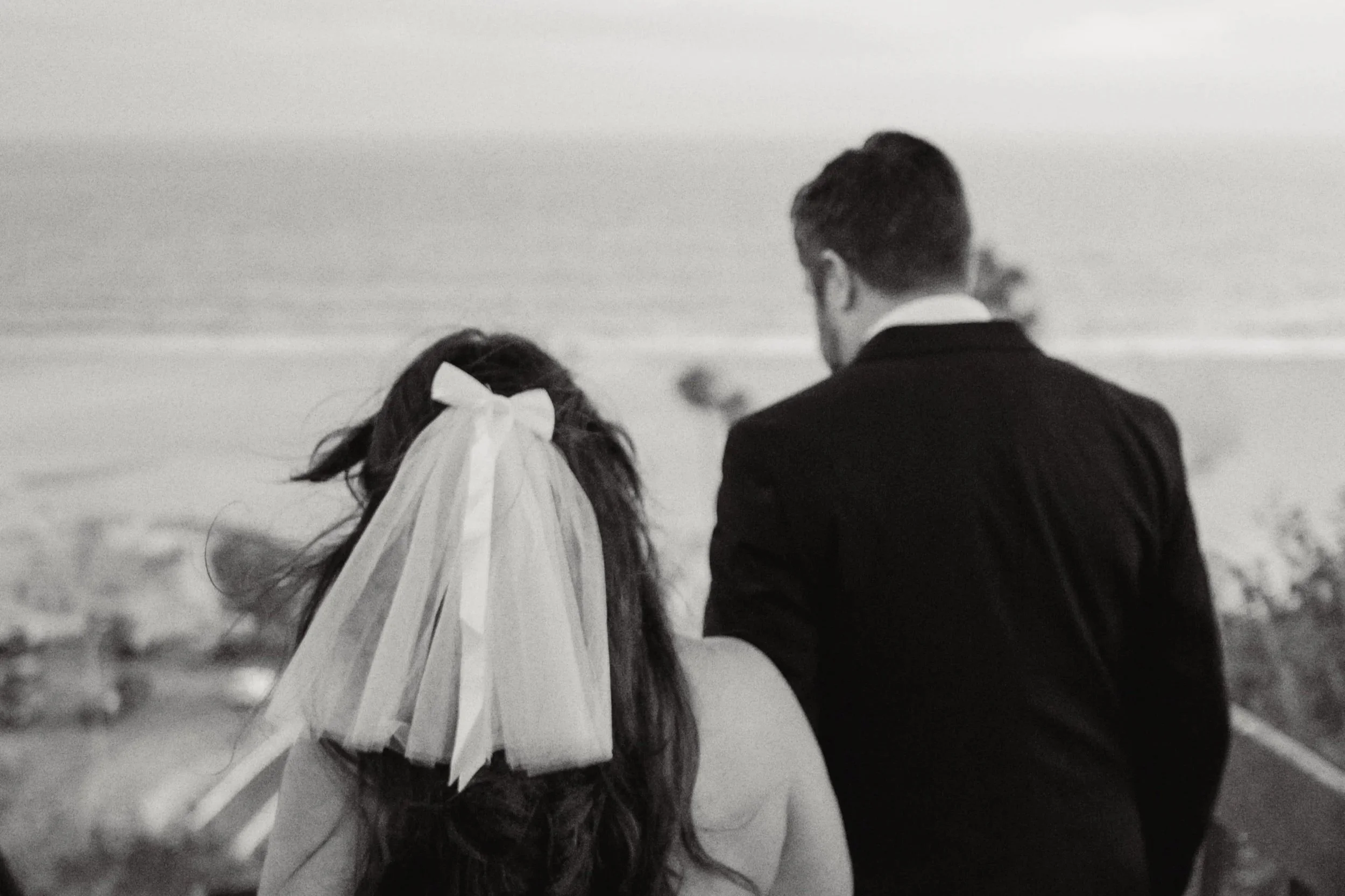
LA works year-round, which is part of the appeal, but a few things help. Mornings and late afternoons give you the best light and the thinnest crowds at popular spots. Late spring and fall are the most reliable weather, summer is hot inland (Griffith, Pasadena) but fine on the coast, and the short rainy stretch in winter is worth planning a backup for. If you want the golden, cinematic look, book a start time about 90 minutes before sunset.
A sample LA elopement day
Every day is built around your locations, but here's the shape of a typical one:
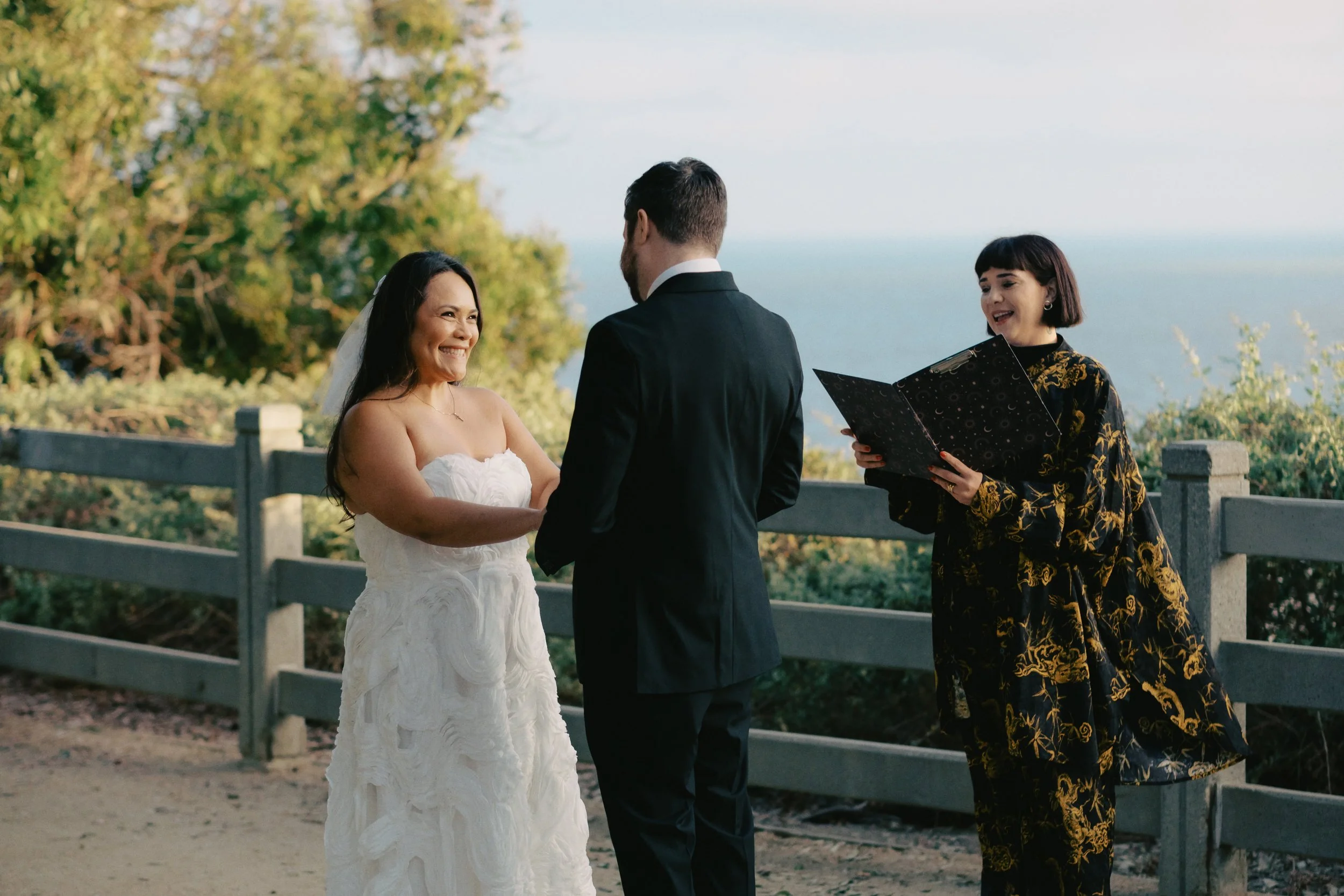
Ceremony, about 20 minutes. Short and personal, at your chosen spot.
Couple photos, about 20 minutes. You and your photographer move to one or two nearby backdrops.
Time with your people, about 20 minutes. Group photos and a breather.
Dinner. Booked near your ceremony area so nobody crosses the city.
The whole thing is designed to move, not to stand around, and to stay inside one area so the day flows.
Real LA elopements
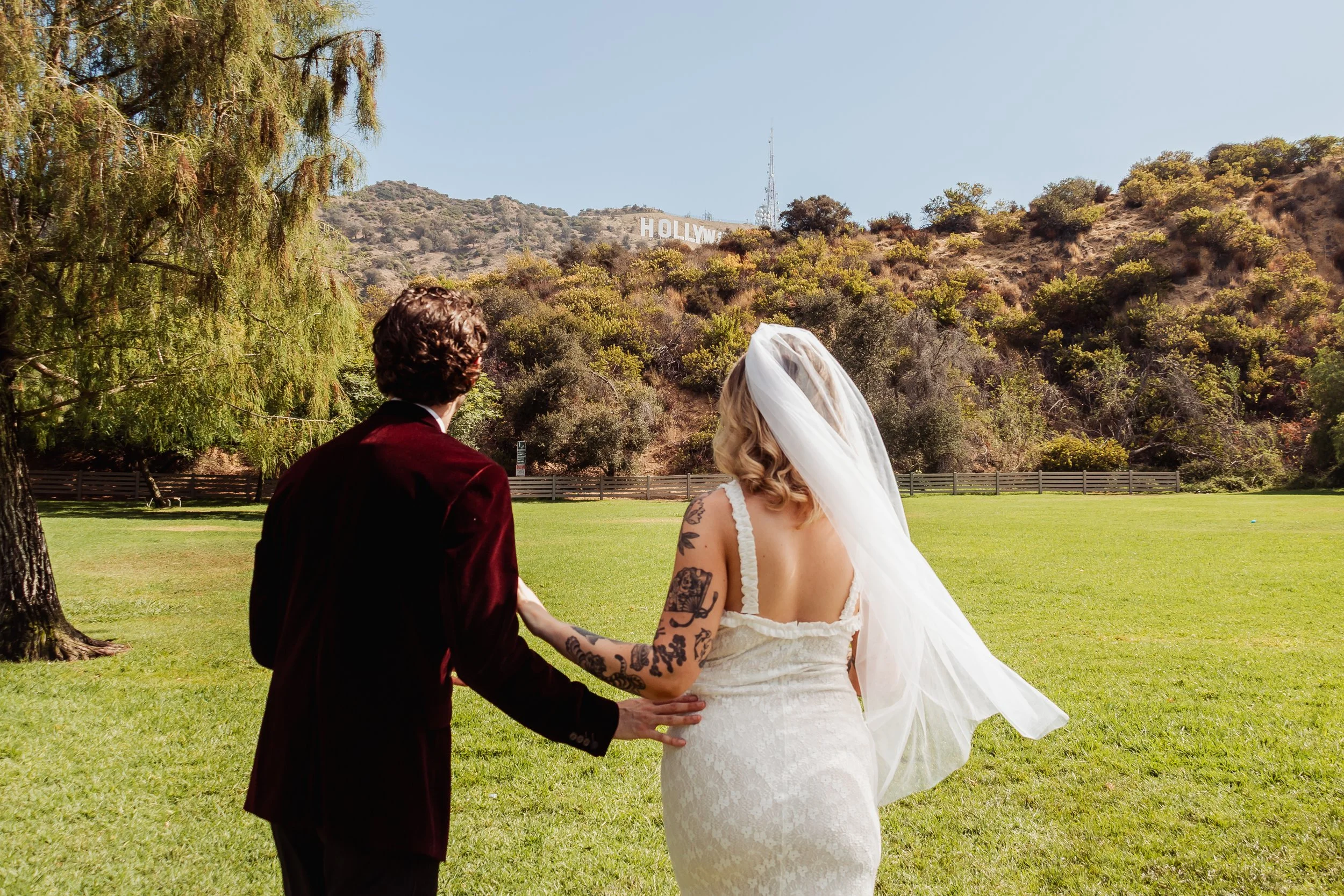
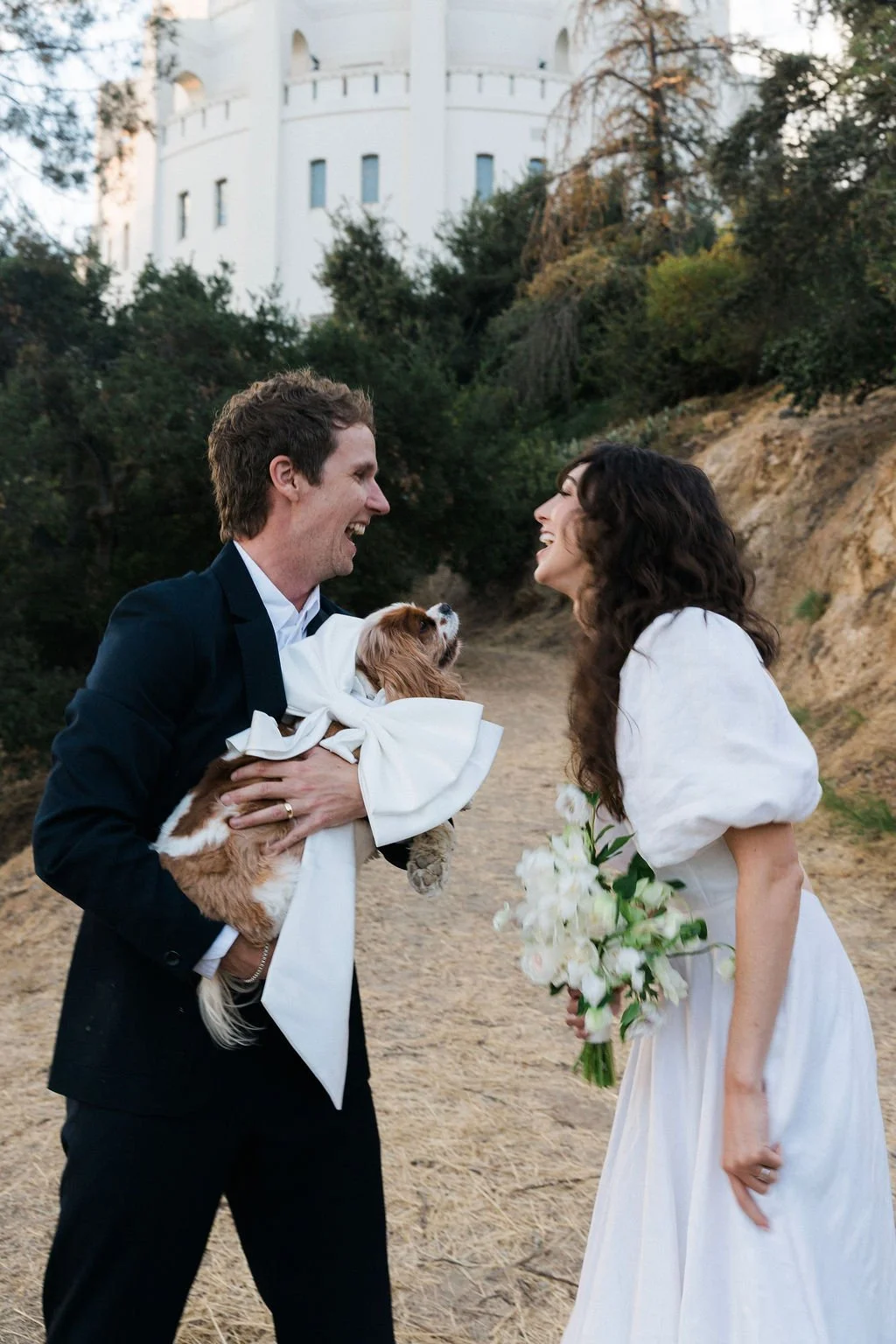
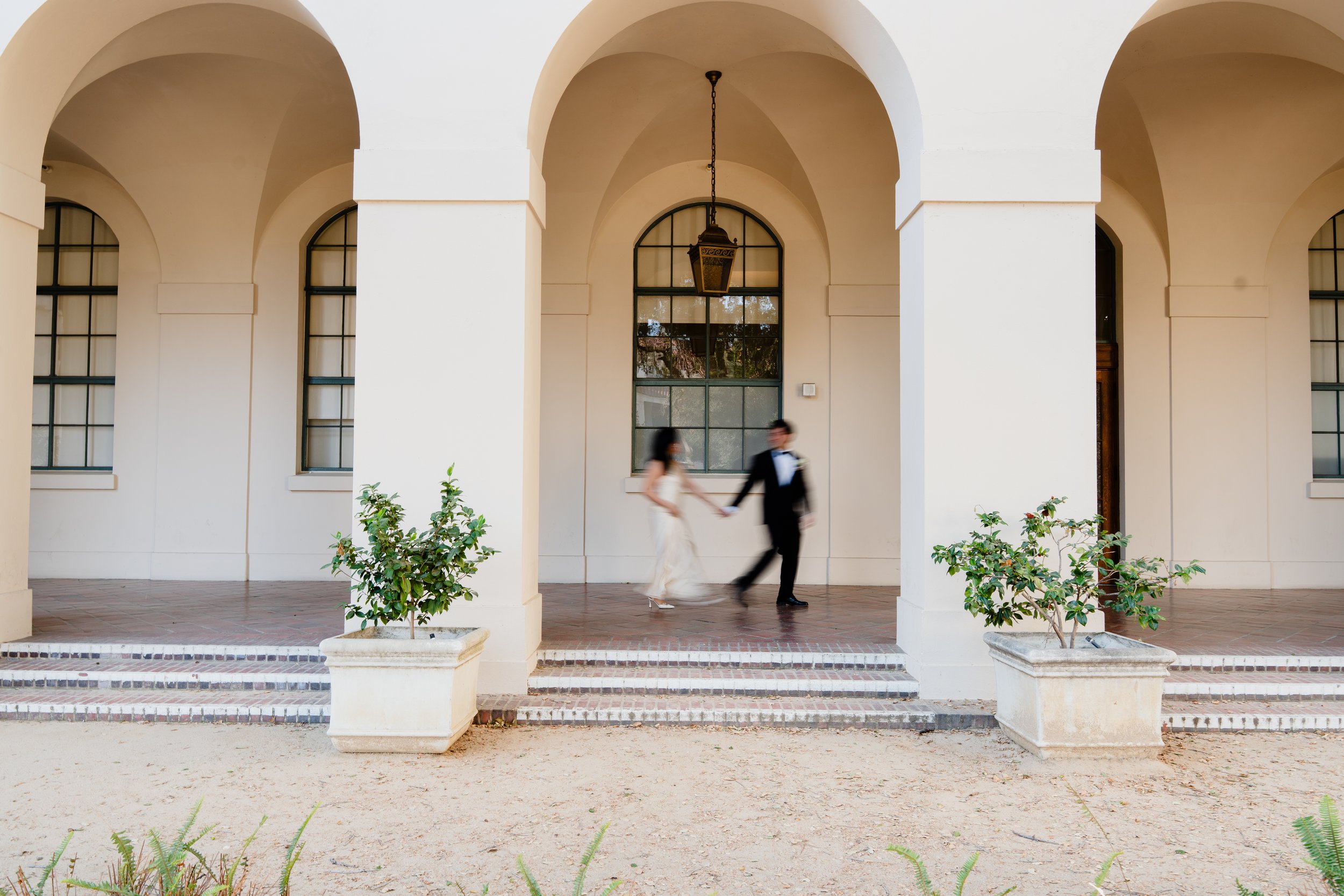
These are real Cakewalk weddings, each in a different corner of the city:
What it costs
Anywhere from a bare-bones DIY afternoon in the low four figures to a fully planned ceremony that removes all the work. The difference is mostly labor: either you're the planner and coordinator on your own wedding day, or someone else is.
We break the full math down in our cost guide.
Common questions
How many guests can we have? Up to about 20, not counting the two of you.
Do we need a permit? Depends on the spot. Public sidewalks and beaches usually don't, parks and landmarks often do, and we handle it either way.
How far ahead should we book? At least a month, more in busy season, since permits, licenses, and vendors all need lead time.
Can we get married and have dinner in the same area? Yes, and you should, see where to eat after you elope in LA →
The Cakewalk version
Everything above, handled. Cakewalk runs ceremony-only LA weddings with the location sourced and permitted, a documentary-style photographer, the marriage license managed, and the whole day planned and coordinated, in one price. You make a few key calls, we do the rest. Starting at $4,000, nothing hidden. If reading that list of steps made you tired, that's the point of us.
See our FAQs for more info.